The Hosmer Grove Trail offers a different side of Haleakalā National Park. Instead of volcanic crater views and exposed summit landscapes, this short nature walk takes you through introduced conifer trees and native Hawaiian shrubland.
Located in the park’s Summit District, the trail is especially interesting for birdwatchers, nature lovers, and visitors who want a relaxed walk before exploring higher elevations. Although short, it reveals an important part of the area’s ecological and forestry history.
Key Takeaways
- Distance: 0.54 mile loop.
- Elevation change: Approximately 50 feet.
- Difficulty: Easy.
- Hiking time: Around 20–40 minutes.
- Main highlights: Introduced trees, native vegetation, and Hawaiian forest birds.
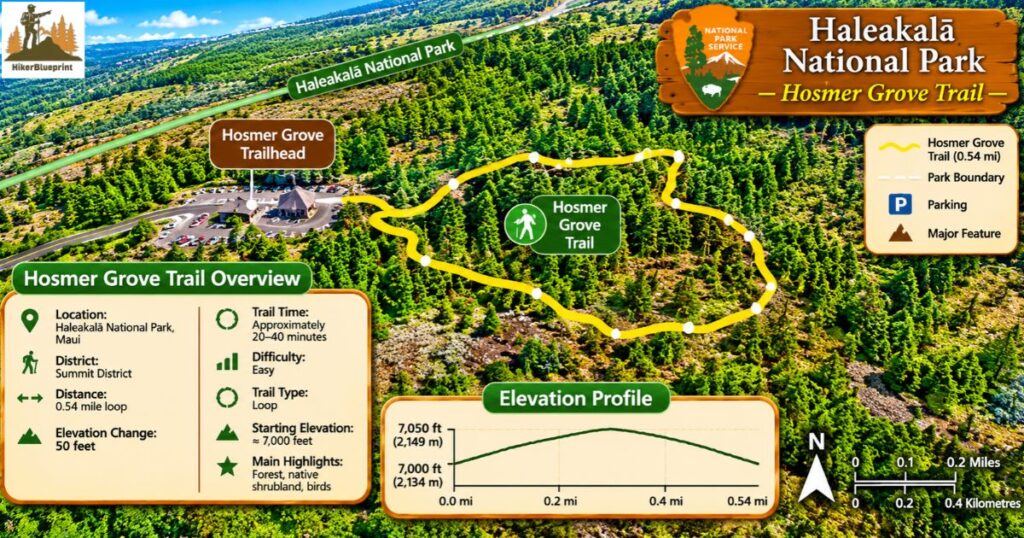
Hosmer Grove Trail Overview
| Trail Detail | Information |
|---|---|
| Location | Haleakalā National Park, Maui |
| District | Summit District |
| Distance | 0.54 mile loop |
| Elevation change | 50 feet |
| Trail time | Approximately 20–40 minutes |
| Difficulty | Easy |
| Trail type | Loop |
| Starting elevation | Approximately 7,000 feet |
| Main highlights | Forest, native shrubland, birds |
The National Park Service lists this route as a 0.54-mile loop with a 50-foot elevation change. It is a relatively short walk, although the high elevation, uneven ground, and occasional wet conditions deserve attention.
Where Is the Trailhead?
The trail is located near the entrance to Haleakalā National Park’s Summit District, along Haleakalā Highway (Highway 378). After entering the park, follow the signs for Hosmer Grove Campground. The trailhead is near the campground parking area.
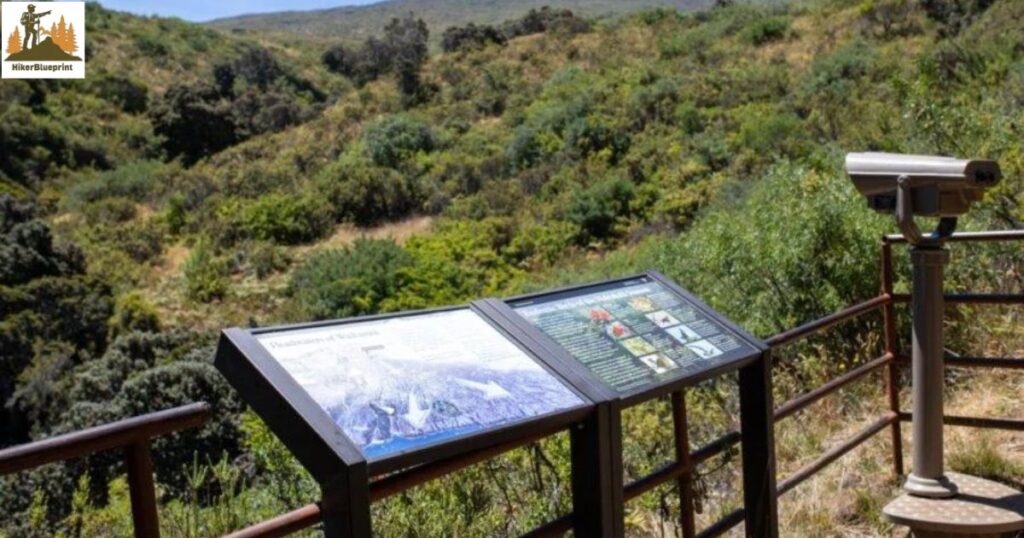
The grove sits just below 7,000 feet, making it a noticeably cooler stop than Maui’s coastal areas. If you’re planning a wider park visit, consult our Haleakala National Park Map guide to understand the Summit District’s roads, overlooks, and hiking areas.
Parking is available near the trailhead, but spaces are limited. The park entrance fee applies, and you should check current conditions before driving up.
What Makes This Forest Walk Special?
Introduced Trees and Forestry History
One of the most interesting features is the unusual mix of trees. In 1909, Ralph S. Hosmer, Hawaiʻi’s first territorial superintendent of forestry, established experimental tree plantings in this area.
The project explored whether introduced trees could grow successfully at higher elevations. Today, visitors can see species such as eucalyptus and conifers that differ from the surrounding native vegetation.
The forest is therefore more than a pleasant place to walk. It also tells a story about earlier forestry experiments and how human activity changed the landscape.
Native Hawaiian Shrubland
As you follow the loop, the dense tree cover gives way to more open vegetation. This transition provides a useful look at the native subalpine environment surrounding the introduced forest.

The contrast is particularly interesting for visitors who want to understand how different plant communities survive at Haleakalā’s elevation.
Birdwatching Opportunities
Birdwatching is one of the strongest reasons to visit. Native Hawaiian honeycreepers, including ʻapapane and ʻiʻiwi, may be seen in the surrounding vegetation.
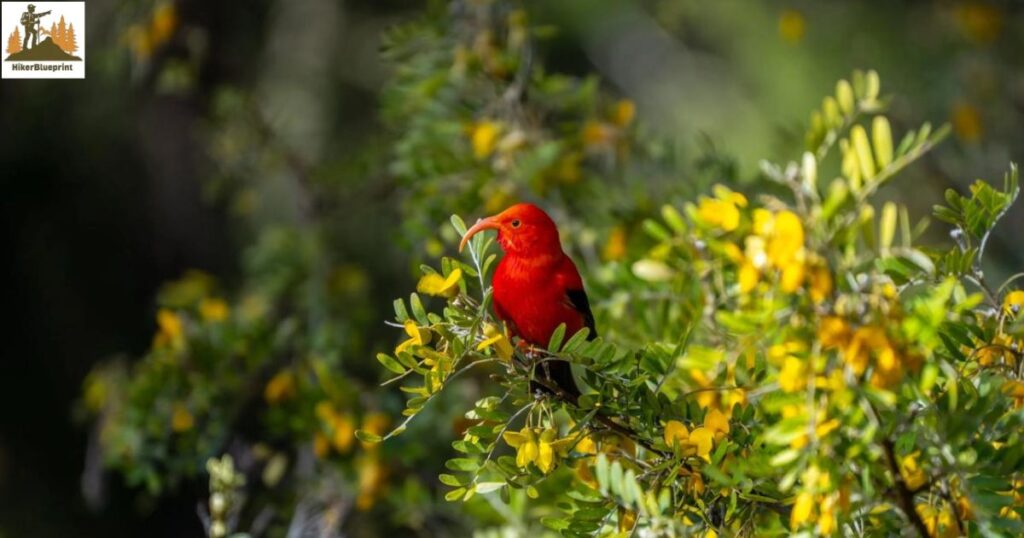
Early morning is generally a good time to look for birds, when the forest is active. Bring binoculars if you have them, stay quiet, and avoid approaching or feeding wildlife. Sightings are never guaranteed.
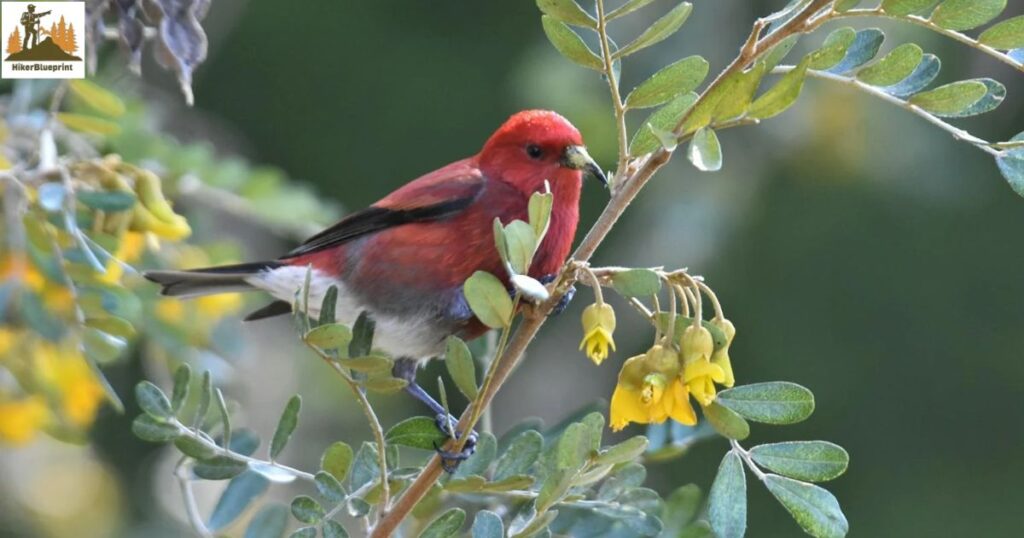
For more outdoor options across the islands, explore Best Hikes in Hawaii and compare this short nature walk with longer routes.
How Difficult Is the Walk?
This is an easy loop for most visitors, without the long climbs found on Haleakalā’s crater trails. However, the path is not a paved walkway. Natural surfaces, exposed roots, and occasional log or rock steps can make footing uneven.
The trail includes a few changes in elevation, particularly around its bird-viewing areas. Wear comfortable walking shoes with good traction, especially after rain.
If you’re looking for a longer Summit District adventure, the Sliding Sands Trail offers a much more demanding descent into Haleakalā’s volcanic crater.
For a completely different hiking experience, explore the Pīpīwai Trail, known for its beautiful bamboo forest and views of Waimoku Falls.
Best Time to Visit
Morning is a good choice for a quieter walk and better opportunities to observe birds. The area lies within Haleakalā’s cloud belt, so mist, wind, rain, and cool temperatures are possible throughout the year.
Bring a light insulating layer and rain protection. Conditions can change quickly at this elevation, even when the coast is warm and sunny.
Parking, Fees, and Facilities
A valid Haleakalā National Park entrance pass is required. There is no separate hiking permit for the daytime nature trail. Parking is available near the campground, and restroom facilities are located in the Hosmer Grove area.
The campground itself requires a separate reservation for overnight stays. You do not need a camping reservation simply to walk the nature trail.
Check the official park alerts before visiting. For more information about overnight stays, consult the Haleakala National Park itinerary when organizing a longer visit.
Frequently Asked Questions
How long does the walk take?
Most visitors can allow approximately 20–40 minutes, depending on walking speed and time spent observing birds.
Is the trail suitable for children?
Its short distance and modest elevation change make it a reasonable option for many families. Watch children around uneven ground and steps.
Can you see native Hawaiian birds?
Yes. Native honeycreepers, including ʻapapane and ʻiʻiwi, live in the surrounding habitat, although sightings aren’t guaranteed.
Is the trail open year-round?
It is generally available throughout the year, but temporary closures and weather conditions can affect access. Check park alerts before visiting.
Is it worth visiting without camping?
Absolutely. You can enjoy the nature loop as a daytime visitor without reserving a campsite.
Final Thoughts
The Hosmer Grove Trail is a worthwhile stop for anyone interested in Haleakalā’s forests, birdlife, and ecological history. Its short loop offers a quieter experience than the park’s famous crater routes. Bring a warm layer, walk carefully, and give yourself time to notice the differences between introduced trees and native Hawaiian vegetation.

Ahmed Khubaib is a passionate hiker with over 10 years of experience in hiking, camping, and exploring trails solo and with kids.
He shares firsthand experiences, practical hiking tips, and trail guides to help adventurers explore the outdoors safely.