
The Pīpīwai Trail is one of Maui’s most rewarding rainforest hikes. Located in the Kīpahulu District of Haleakalā National Park, this route takes you through lush tropical forest, past a towering banyan tree, and into a remarkable bamboo grove before reaching the viewing area for Waimoku Falls.
The hike is beautiful, but it takes more effort than a quick waterfall stop. Expect muddy ground, exposed roots, steady climbing, and changing weather. Allow enough time to enjoy the route without rushing.
Key Takeaways
- Distance: 4 miles round trip.
- Elevation gain: Approximately 800 feet.
- Difficulty: Moderately strenuous.
- Time: Around 3–4 hours with stops.
- Main highlight: The bamboo forest and Waimoku Falls.
Pipiwai Trail Overview

| Trail Detail | Information |
|---|---|
| Location | Kīpahulu District, Haleakalā National Park |
| Distance | 4 miles round trip |
| Elevation gain | 800 feet |
| Hiking time | 3–4 hours |
| Difficulty | Moderately strenuous |
| Trail type | Out-and-back |
| Trailhead | Near Kīpahulu Visitor Center |
| Main destination | Waimoku Falls viewing area |
The National Park Service describes this route as moderately strenuous. The trail climbs gradually through a humid rainforest, with uneven surfaces and occasional slippery sections. You return along the same path.
Where Does the Trail Begin?
The trailhead sits near the Kīpahulu Visitor Center, approximately 12 miles beyond Hāna along the Hāna Highway. Follow the signs into the coastal district of Haleakalā National Park and park in the visitor center lot.
Remember that Kīpahulu is not connected by an internal road to the park’s Summit District. Reaching the trail requires driving around the island’s southeastern side. The road beyond Hāna can be slow, so avoid planning a tight schedule.
Before leaving, review the Haleakala National Park Map guide to understand the park’s separate districts and layout.
What to Expect Along the Trail
Makahiku Falls Overlook
The first major highlight appears about half a mile from the trailhead. A short climb brings you to the Makahiku Falls overlook, where you can see water descending through dense tropical vegetation.
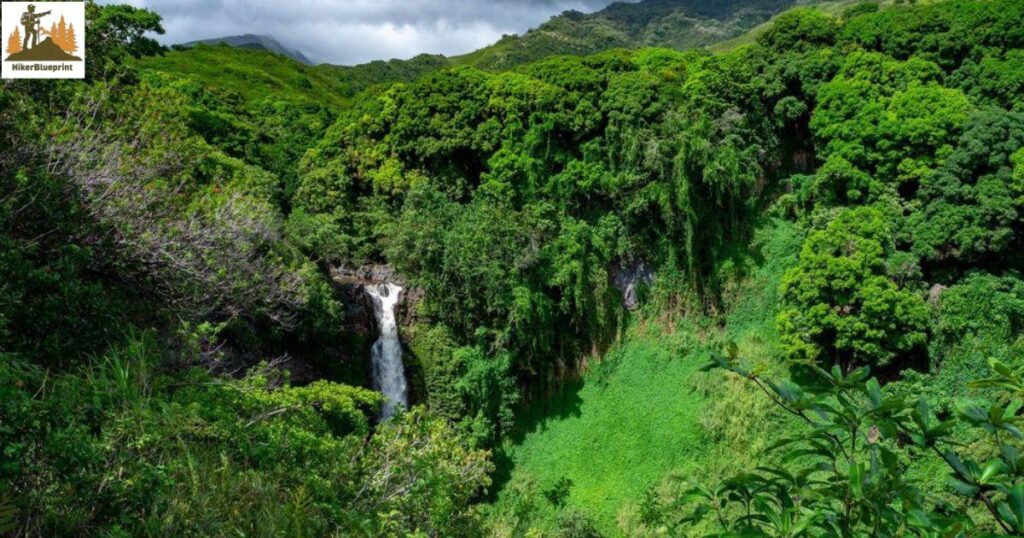
The official trail distance to this viewpoint is approximately 0.5 mile one way. It makes a reasonable turnaround point if you have limited time or prefer a shorter outing.
The Giant Banyan Tree
Continue through the forest and you’ll encounter a striking banyan tree with thick branches and hanging aerial roots. Its unusual structure makes it one of the memorable natural features along the route.
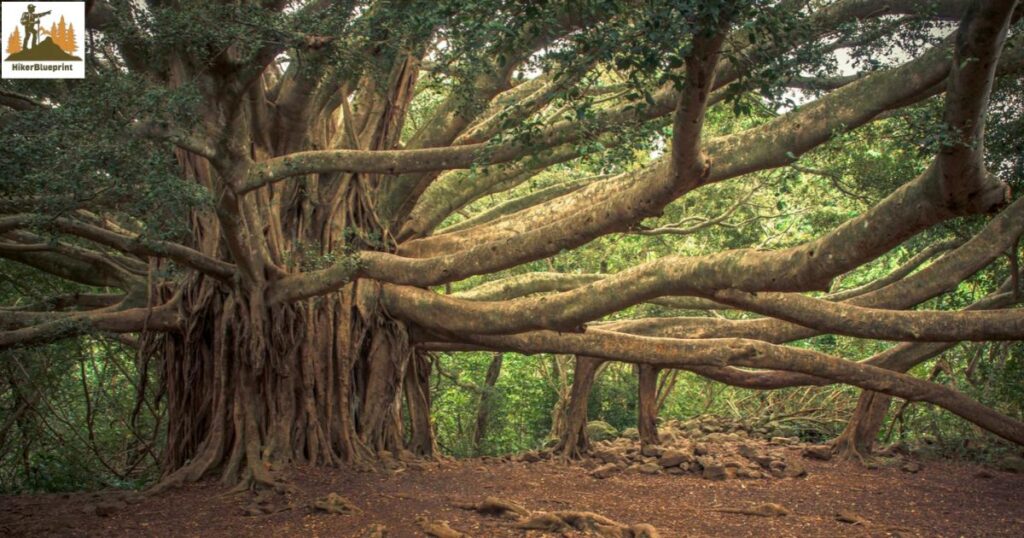
The surrounding vegetation becomes increasingly dense as you gain elevation. Take care on exposed roots, particularly after rainfall.
The Bamboo Forest
Around one mile into the hike, the landscape changes dramatically. Tall bamboo rises on both sides of the path, creating a shaded corridor that feels different from the earlier rainforest sections.
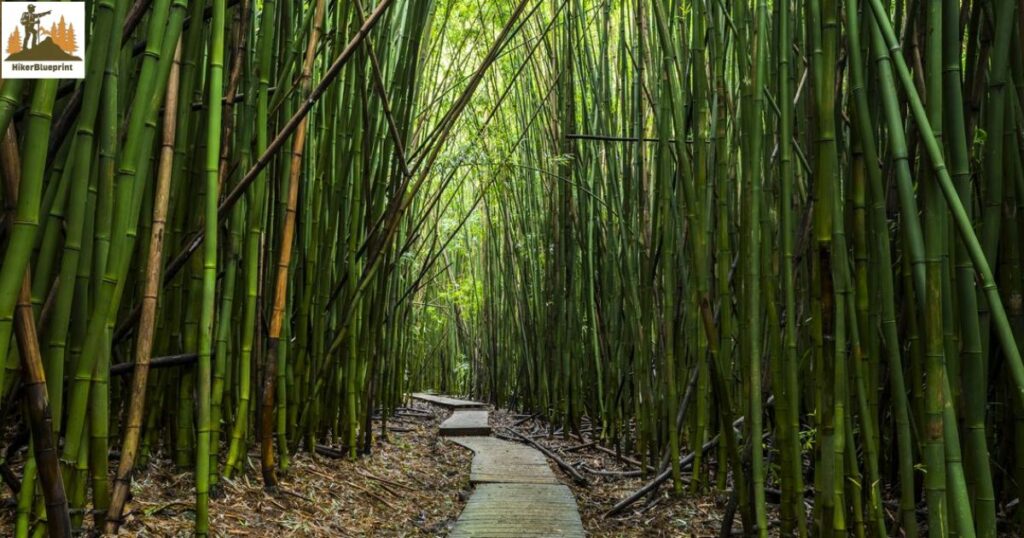
Wooden boardwalks and footbridges help hikers cross portions of this wet environment. The bamboo can sway and rustle in the wind, adding another layer to the experience. However, the boards can become slippery, so walk carefully.
Waimoku Falls
Beyond the bamboo forest, the route continues through more rainforest toward Waimoku Falls. The waterfall drops approximately 400 feet down a steep rock face and is the main destination of the hike.
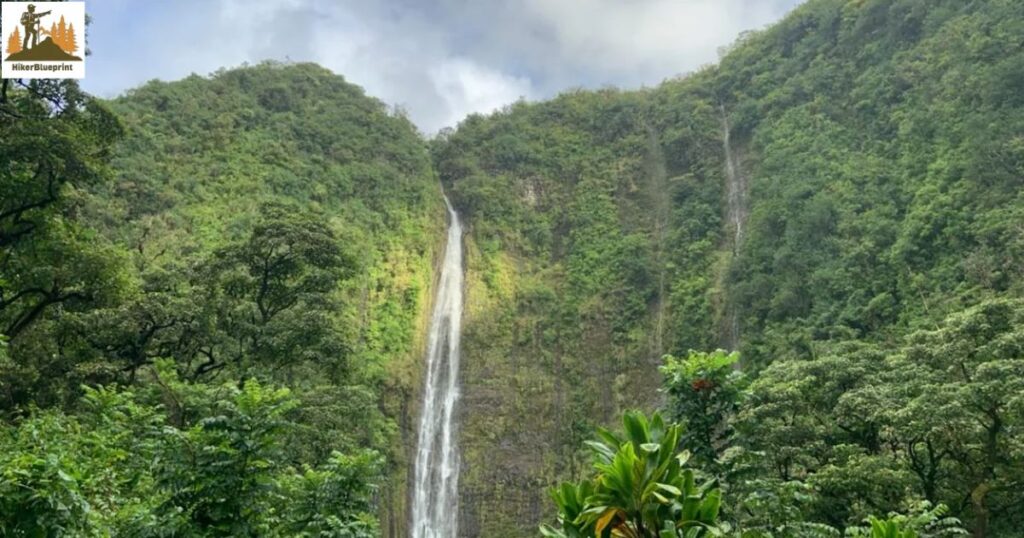
The viewing area marks the end of the maintained route, about two miles from the trailhead. Stay behind barriers and respect closure signs. Falling rocks make approaching the waterfall base dangerous.
How Difficult Is the Pīpīwai Trail?
This is not a technical mountain climb, but it requires reasonable fitness. The steady 800-foot elevation gain, humid conditions, muddy ground, roots, and uneven steps make the return journey tiring.
Wear hiking shoes or sturdy trail shoes with good grip. Lightweight footwear with smooth soles is a poor choice, especially when the forest is wet.
If the full route feels too demanding, consider turning around at Makahiku Falls or the bamboo forest. Don’t continue simply because the waterfall seems close. There is still a substantial walk beyond the bamboo.
Best Time to Hike
Morning is generally the most comfortable time to start. You’ll have more daylight, cooler conditions, and a better chance of finding parking before the busiest part of the day.
Kīpahulu receives frequent rainfall, so expect humid air and occasional showers throughout the year. Light rain is common, but avoid hiking during heavy rainfall, flash-flood warnings, or unsafe stream conditions. Check official alerts before setting out.
Parking, Fees, and Trail Access
An entrance pass is required for Haleakalā National Park. A private vehicle pass currently costs $30 and is valid for three days, covering both park districts. The park does not accept cash.
No separate hiking permit or sunrise reservation is required for this route. Sunrise reservations apply to the Summit District, not the Kīpahulu hiking area.
Bring your own food, drinking water, insect repellent, and sun protection. Fuel and food are not available inside the park, and cellular service in Kīpahulu can be limited.
For another Hawaiian hiking destination, explore Best Hikes in Hawaii. If you’re visiting the Summit District on a separate day, the Sliding Sands Trail and Hosmer Grove Trail offer very different landscapes. You can organize those visits with a Haleakala National Park itinerary.
Frequently Asked Questions
How long does the Pīpīwai hike take?
Allow approximately 3–4 hours for the full round trip, including time at the waterfall and bamboo forest.
Is Pīpīwai Trail suitable for beginners?
Beginners with reasonable fitness can attempt it, but muddy surfaces, climbing, and humidity make it more demanding than an easy nature walk.
Can you swim at Waimoku Falls?
No. Stay outside restricted areas and do not approach the waterfall base because of falling-rock hazards.
Is a reservation required?
No separate reservation is required for daytime hiking in the Kīpahulu District. A valid park entrance pass is required.
Can you hike only to the bamboo forest?
Yes. You can turn around when you reach the bamboo section, approximately one mile from the trailhead.
Final Thoughts
The Pīpīwai Trail offers a memorable combination of rainforest scenery, giant bamboo, and a dramatic waterfall. Give yourself enough time, wear shoes with good traction, and respect all safety barriers. Checking current park conditions before driving to Kīpahulu will help make the day smoother.

Ahmed Khubaib is a passionate hiker with over 10 years of experience in hiking, camping, and exploring trails solo and with kids.
He shares firsthand experiences, practical hiking tips, and trail guides to help adventurers explore the outdoors safely.