Acadia National Park has no shortage of spectacular hikes, but some of its most memorable scenery comes from a walk beside the water. The Pond Loop around Jordan Pond combines clear lake views, wooded shoreline, exposed rocks, and the distinctive twin peaks known as the Bubbles. It offers a rewarding introduction to Acadia without requiring a long day of strenuous hiking.
The main shoreline route is approximately 3.3 miles long. Most visitors can complete it in about 1.5 to 3 hours, depending on their pace, stops, and the condition of the trail. If you want more elevation and a panoramic view over the water, you can add a climb toward South Bubble and the famous Bubble Rock.
However, this isn’t a completely smooth lakeside stroll. Parts of the trail involve uneven rocks, roots, stepping stones, and narrow boardwalks. Wet weather can make the footing slippery, while winter ice can change the difficulty considerably.
This guide explains how to plan the Jordan Pond hike, choose a suitable route, find parking, understand seasonal access, and decide whether the South Bubble side trip belongs in your itinerary.
Jordan Pond Loop at a Glance

The shoreline trail is a good choice for visitors who want to experience Acadia’s mountain scenery without committing to a major summit hike. Its relatively short distance makes it easy to combine with other attractions on Mount Desert Island.
| Trail detail | What to know |
|---|---|
| Location | Jordan Pond, Acadia National Park, Mount Desert Island, Maine |
| Main route | Jordan Pond Path |
| Distance | Approximately 3.3 miles around the pond |
| Typical hiking time | About 1.5–3 hours |
| Difficulty | Easy to moderate, depending on conditions and experience |
| Terrain | Gravel, rocks, roots, stepping stones, and boardwalk sections |
| Elevation | Generally low elevation change around the shoreline, with uneven terrain |
| Route type | Loop |
| Direction | Clockwise or counterclockwise |
| Longer option | Add South Bubble and Bubble Rock |
| Parking | Jordan Pond North Lot and nearby designated parking areas |
| Entrance pass | Required for Acadia National Park |
| Trail reservation | No reservation is listed for the Jordan Pond Path |
| Dogs | Permitted on a leash no longer than six feet |
| Accessibility | The full shoreline trail is not wheelchair accessible |
Important: Trail distances and hiking times are approximate. Adding South Bubble changes the overall mileage and difficulty, and winter conditions can make even a short walk much slower.
The National Park Service identifies the Jordan Pond boat launch as the starting point for the shoreline hike. Visitors can walk the route in either direction, but they should expect uneven footing and a small bridge along the way.
For current access information, consult the official Jordan Pond visitor information before leaving for the park.
Where Is Jordan Pond, and How Do You Reach the Trailhead?
Jordan Pond is in the eastern part of Acadia National Park on Mount Desert Island, Maine. It lies near Bar Harbor and the village of Seal Harbor, making it a convenient stop on a broader Acadia itinerary.
The lake is especially recognizable because North Bubble and South Bubble rise above its northern shoreline. On a clear day, their rounded profiles create the classic landscape many visitors associate with Acadia.
Driving to Jordan Pond
If you’re driving from the Hulls Cove Visitor Center, follow the Park Loop Road toward Jordan Pond. The National Park Service directs motorists to continue straight at the relevant intersection rather than following the one-way section toward Sand Beach.
Look for the Jordan Pond signs and the designated parking areas near Jordan Pond House. The North Lot provides access to the boat launch, where the shoreline trail begins.
Jordan Pond is also accessible from the Stanley Brook entrance area near Seal Harbor. Your best approach depends on your starting point and the roads open during your visit.
Use the official Acadia directions and transportation page to check the current road network.
Taking the Island Explorer Bus
Driving isn’t your only option during the bus season. The fare-free Island Explorer provides transportation to Jordan Pond, including a stop serving the Jordan Pond House area.
The service operates seasonally, so don’t assume a bus will be available during a winter visit or outside the published operating dates. Routes and timetables can also change.
Check the Island Explorer transportation information before planning your day around the bus. Allow enough time for the return journey, especially if you intend to add South Bubble to your hike.
Parking and Entrance Fees
Parking is one of the most important logistical considerations at Jordan Pond. The National Park Service lists a North Lot serving Jordan Pond and the boat launch, but spaces can become scarce during busy periods.
Arriving early is a practical way to improve your chances of finding a space. Late morning and afternoon can be particularly congested during the main visitor season. If the designated lot is full, don’t stop along the road or park in an unauthorized area.
A separate parking reservation is not listed for the Jordan Pond Path itself. However, visitors must still follow Acadia’s entrance-pass requirements.
Acadia requires an entrance pass year-round. Fees and payment arrangements can change, so check the official Acadia fees and passes page before your trip. Display your pass as instructed.
The main lesson is simple: check both parking and entrance requirements before setting out. A little preparation can save time and prevent a frustrating start to your hike.
What Is the Jordan Pond Path Like?
The shoreline route is memorable because the scenery and walking surface change as you move around the lake. You won’t spend the entire hike on a wide, level path.
Some sections are relatively smooth and easy to follow. Others require you to step over roots, negotiate rocks, or cross narrow wooden walkways. The route rewards a relaxed pace, especially if you’re carrying a camera or hiking with children.
The South Shore and Starting Area
Many visitors begin near the boat launch, close to Jordan Pond House. This area provides access to the water and an immediate introduction to the surrounding mountains.
The scenery is inviting, but it’s worth resisting the temptation to rush straight into the walk. Take a moment to check your footwear, adjust your pack, and look at the trail signs before starting.
If you’re hiking with children or less-experienced walkers, explain that the path isn’t uniformly smooth. Keeping everyone together is easier when the group understands that certain sections require slower, more careful steps.
The Eastern Shore: Rocks, Roots, and Uneven Footing
Parts of the eastern shoreline have a rougher character than visitors may expect from a lake loop. Rocks, roots, and irregular ground require attention, particularly after rain.
Don’t assume that a short distance means you can walk quickly. The trail’s surface determines how fast you can safely move, and taking your time is often more enjoyable than trying to maintain a steady pace.
Choose footwear with good traction and avoid stepping onto wet rocks unless you can do so securely. If someone in your group has balance difficulties, assess the terrain carefully before committing to the entire loop.
The Western Shore and Boardwalk Sections
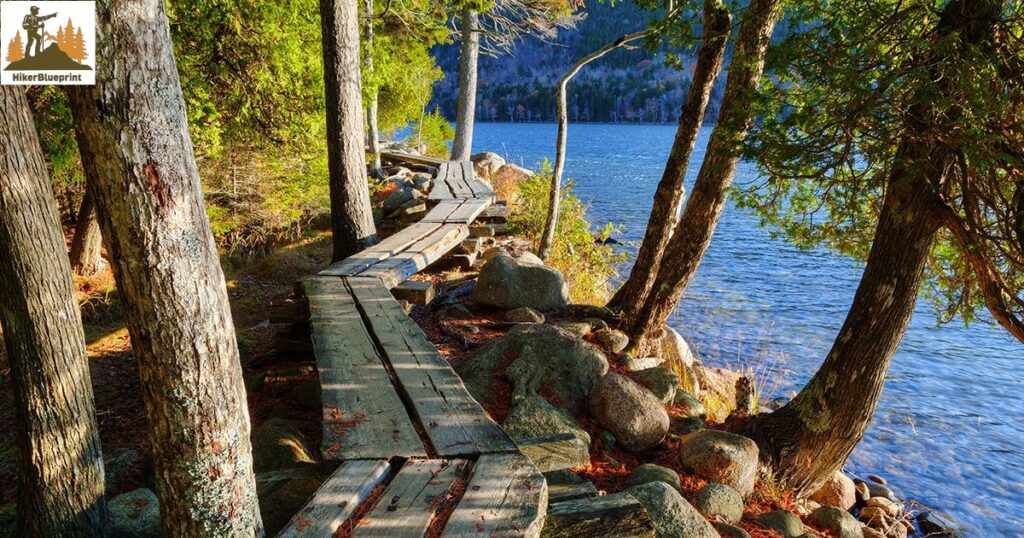
The western side includes the familiar boardwalk portions that help hikers navigate sections of the shoreline. These wooden walkways are a distinctive part of the experience, but they can become slippery when wet or icy.
Narrow sections may also slow progress when the trail is busy. Be patient when passing other hikers, and avoid stepping off designated paths to get around a queue.
The boardwalk is one reason the Pond Loop feels different from an ordinary gravel path. It provides an up-close view of the shoreline while reminding visitors that trail conditions matter just as much as distance.
Which Direction Should You Hike?
The route can be completed clockwise or counterclockwise. Neither direction is universally best, so choose according to your preferences and current conditions.
Counterclockwise is a reasonable option if you prefer to tackle certain rougher sections earlier in your walk. Clockwise may appeal if you’d rather reach particular boardwalk sections sooner.
There is no need to treat either direction as a rule. Check the route markers, respect any closures, and make decisions based on your group’s comfort level.
Is the Jordan Pond Loop Difficult?
For many reasonably mobile visitors, the shoreline trail is manageable because it doesn’t involve a sustained mountain ascent. However, describing it as easy without explaining the terrain can create unrealistic expectations.
The Pond Loop includes sections where you must watch your footing, and some hikers may find the rocks and stepping stones more challenging than the distance suggests.
Beginners
If you’re new to hiking, this can be a rewarding route provided you prepare for uneven ground. Wear shoes with good traction, bring water, and give yourself enough time to move at a comfortable pace.
You don’t need to rush to finish within a particular time. Allow for breaks and turn back if conditions are worse than expected or someone in your group becomes uncomfortable.
Families With Children
The shoreline scenery can make this a memorable family outing, but the full route isn’t equivalent to a paved playground path.
Children may need help on rocky sections and stepping stones. Keep them close around the water and on narrow boardwalks, and explain that the rocks aren’t safe places for running or climbing.
For younger children, consider whether the entire loop is appropriate for their age, stamina, and confidence on uneven surfaces. A shorter outing near the accessible visitor area may be a better choice.
Visitors With Mobility Limitations
The National Park Service states that the full Jordan Pond Path is not accessible. Uneven footing, stepping stones, and a small bridge make the shoreline route unsuitable for many visitors who require a smooth, step-free surface.
That doesn’t mean everyone with a mobility limitation must skip the area. The Jordan Pond House and boat-launch area offer more accessible facilities, and some nearby paved areas may provide scenic views without completing the trail.
Check the National Park Service’s Jordan Pond information to understand which areas may suit your needs. If you use a mobility aid, confirm the current surface and access details before traveling.
Adding South Bubble and Bubble Rock
If the shoreline walk leaves you wanting a more challenging outing, consider adding South Bubble. The summit offers a higher perspective over Jordan Pond and the surrounding mountains, while Bubble Rock provides one of Acadia’s most recognizable geological features.
This extension requires more effort than the shoreline trail. The climb includes steep, rocky terrain, so it’s important to assess your fitness, footwear, and the weather before continuing.
What Is South Bubble?

South Bubble is one of two distinctive peaks overlooking Jordan Pond. The other is North Bubble.
From higher ground, hikers can look across the lake toward the surrounding mountains and appreciate how glaciers shaped the landscape. The change in perspective is the main reward for taking on the climb.
The National Park Service describes the nearby Bubbles hike as a short route with forested paths, steep rocky sections, exposed granite, and wide stairs. Although the distance is modest, the terrain makes it more demanding than a flat walk.
Consult the official Hike Bubbles trail guide when planning your summit visit.
What Is Bubble Rock?

Bubble Rock is a large boulder perched near the summit area of South Bubble. It is a glacial erratic, meaning it was transported from its original location by glacial ice and left behind as the ice retreated.
Its unusual position makes it an eye-catching landmark. Visitors often photograph the boulder against the surrounding scenery, but the rock should be treated as a natural feature rather than a climbing attraction.
Stay on designated surfaces, avoid risky scrambling, and don’t push yourself toward an exposed edge for a better photograph.
How Much Extra Time Should You Allow?
The additional time depends on which route you choose, how far you climb, and the condition of the trail.
The National Park Service lists the Bubbles hike from its designated trailhead as approximately 1.5 miles round trip, generally taking 60 to 90 minutes. That figure describes the Bubbles hike itself, not a combined itinerary beginning with the entire Jordan Pond shoreline.
If you combine the shoreline route with a summit outing, allow substantially more time than you would for either short hike alone. Route connections and the chosen trailhead affect the total mileage, so verify your planned route on an official map before leaving.
Don’t rely on a single estimate when deciding whether you can finish before dark. Include time for rest stops, photographs, slower travel over rocks, and an unexpected delay.
Should You Visit North Bubble Too?
North Bubble is another option for hikers who want more summit scenery. The National Park Service describes routes in the area that connect the two peaks and offer views of Jordan Pond, Eagle Lake, and surrounding mountains.
However, adding both summits increases the distance and the amount of rocky terrain you must negotiate. It isn’t necessary to climb every nearby peak to enjoy the area.
Choose South Bubble if your priority is the classic view over Jordan Pond and a visit to Bubble Rock. Consider North Bubble or a longer route only if your group has the time, fitness, equipment, and confidence for additional climbing.
Best Time of Year to Hike Jordan Pond
Jordan Pond is a year-round destination, but the experience changes considerably with the seasons. The best time for your visit depends on the scenery you want, the weather you’re comfortable with, and whether you’re planning to hike the shoreline only or include a summit.
Spring
Spring brings changing weather and the gradual return of the main visitor season. Trails may remain wet, muddy, or icy in places, particularly early in the season.
Don’t assume that warmer temperatures in Bar Harbor mean the higher or more exposed trail sections are dry. Check the forecast and recent park updates, and be prepared to change your plans if the ground is slippery.
Some visitor facilities and transportation services operate seasonally. Confirm opening dates if you want to combine the hike with a restaurant visit or a bus journey.
Summer
Summer is a popular time to visit Jordan Pond because the days are longer and many seasonal services operate.
The downside is congestion. Parking can fill, narrow sections of trail can become crowded, and finding a quiet moment beside the water may take patience.
An early start is usually a sensible choice. It gives you more flexibility with parking and leaves time for a longer walk or an additional attraction.
Bring water, sun protection, and a light layer for changing weather. Even when the shoreline feels comfortable, conditions on exposed granite can differ from those in sheltered areas.
Fall
Autumn brings changing foliage and a different atmosphere to the surrounding forest. The combination of colorful trees, still water, and mountain scenery makes this an appealing time for photographers.
Fall is also popular, particularly around weekends and peak foliage periods. Don’t assume that beautiful weather will mean empty trails or easy parking.
Temperatures can drop, daylight decreases, and rain can make rocks and boardwalks slippery. Check the forecast and leave sufficient time to finish before dark.
Winter
Winter transforms the area, but it also demands more careful planning. Snow and ice can make the shoreline trail difficult, while steep summit routes may become unsuitable for hikers without appropriate equipment and experience.
The Park Loop Road closes to most motor vehicles from December 1 through April 14, subject to weather and road-opening conditions. Access to Jordan Pond is available via Jordan Pond Road in Seal Harbor, but visitors should confirm current conditions before traveling.
The official Acadia winter information page explains seasonal road access and other winter considerations.
For a winter outing, bring suitable traction when conditions require it, warm layers, and a reliable light source if there’s any possibility of finishing near dusk. If the rocks are icy or the route feels unsafe, skip the summit extension.
Parking, Fees, Reservations, and Seasonal Access
A successful trip involves more than choosing a trail. Parking, entrance passes, transportation, and seasonal road restrictions can affect how much time you have to hike.
Do You Need a Hiking Reservation?
The National Park Service does not list a separate reservation requirement for the Jordan Pond Path. The Bubbles hike is also listed without a trail reservation requirement.
However, reservation rules can differ between destinations and activities within Acadia. Don’t assume that the absence of a hiking reservation means every activity in the park is reservation-free.
Check official information for any additional destinations you plan to visit, especially if your itinerary includes other popular park attractions.
Do You Need to Pay an Entrance Fee?
Yes. Acadia requires an entrance pass year-round, including for visitors coming to Jordan Pond.
The precise fee depends on the type of pass and applicable rules. Review the official fees and passes information before your visit rather than relying on a price quoted in an older article.
Keep your pass available and follow the instructions for displaying it in your vehicle. If you’re arriving by bus or on foot, check which pass rules apply to your situation.
When Are Roads Closed?
The Park Loop Road closes to most motor vehicles from December 1 through April 14. Spring opening is weather-dependent, and the closure affects access to many parts of the park.
Jordan Pond is an exception in that road access is available through Jordan Pond Road in Seal Harbor during the winter closure period. This doesn’t guarantee that every nearby facility or trail connection will be open or suitable for hiking.
Check the official road and transportation information shortly before traveling. Weather, maintenance, and other circumstances can affect access.
What About Bathrooms and Other Facilities?
Facilities and visitor services vary by season. Jordan Pond House operates seasonally, and its opening dates may not align with your visit.
Don’t depend on a restaurant, restroom, or shop being open simply because it’s located near a popular trail. Confirm operating hours in advance, particularly if you’re visiting early in the morning, late in the season, or during winter.
Carry the water, food, and clothing you need for your planned outing. Being prepared is especially important when adding a summit or visiting when services are limited.
Safety and Preparation for the Hike
Good preparation helps you enjoy the scenery without turning a short outing into an uncomfortable or risky experience.
The most important considerations at Jordan Pond are uneven footing, slippery surfaces, changing weather, and the extra demands of the Bubbles’ rocky slopes.
Choose Footwear With Good Traction
Wear hiking shoes or trail footwear that provides reliable grip on rocks and uneven ground.
Wet boardwalks and smooth granite can be slippery. Ordinary running shoes may be adequate for some visitors in dry conditions, but their suitability depends on the tread and the terrain you’re tackling.
For winter outings, assess whether traction devices are appropriate for the conditions. Don’t attempt steep icy sections if you lack the equipment or experience to travel safely.
Bring Water, Snacks, and Extra Layers
Even a short hike can take longer than expected when the trail is busy or the footing is rough.
Bring enough drinking water for the group and pack snacks if you expect to be out for several hours. An additional layer is useful when wind or rain changes the temperature, particularly on exposed sections near the summit.
Carry a map or an offline route reference, and make sure someone in the group understands the planned route.
Check the Weather and Trail Conditions
Conditions can change quickly along Maine’s coast. Rain can make the rocks slick, wind can reduce comfort on exposed terrain, and winter weather can introduce snow and ice.
Check the local forecast before setting out. Review official park alerts for closures or other restrictions, and adjust your route when conditions don’t match your plans.
A summit is optional. If the rocks are wet, the trail is icy, or visibility is poor, enjoying the shoreline alone can be the better decision.
Keep Children and Dogs Under Control
The trail includes narrow areas, uneven surfaces, and places close to the water. Keep children within sight and give them clear instructions about where to walk.
Dogs are allowed on the Jordan Pond Path subject to park rules, including a leash no longer than six feet. Keep dogs under control around other visitors and avoid letting them disturb wildlife or damage vegetation.
Check the latest park regulations if you’re visiting with a pet, and bring whatever you need to manage waste responsibly.
Protect Jordan Pond
Jordan Pond is an important source of drinking water, so special restrictions apply. The National Park Service prohibits swimming and certain water activities, including paddleboarding and motorized boating above the permitted limit.
Stay on designated paths and avoid marked restoration areas. Pack out all trash, don’t feed wildlife, and resist the temptation to move off the trail for a photograph.
These small choices help protect the landscape that makes the area so appealing.
Suggested Itineraries: Shoreline Walk or Summit Adventure?
The best itinerary depends on how much time you have and what kind of hiking experience you want. You don’t need to add a summit to make the visit worthwhile.
Option 1: A Relaxed Morning at Jordan Pond
Best for: Beginners, families with older children, and visitors who want to enjoy the shoreline.
Start early and park in a designated area near Jordan Pond. Walk the shoreline route at a comfortable pace, allowing time for photographs and breaks.
After finishing, explore the visitor area and check whether Jordan Pond House is open if you’d like to stop for refreshments. If you have additional time, consider a nearby carriage road or another short outing.
This itinerary leaves room to enjoy the surroundings without making the day depend on completing a challenging climb.
Option 2: Jordan Pond Plus South Bubble
Best for: Hikers who are comfortable with uneven ground and short, steep climbs.
Begin with the shoreline route, then continue to South Bubble only if you have enough daylight, energy, and suitable conditions.
Before starting, confirm the route connections and total distance. Don’t assume that the short distance listed for the standalone Bubbles hike represents the mileage of a combined outing.
Bring water, snacks, and a layer for the exposed summit. If the rocky ascent is wet or icy, choose the shoreline walk instead.
Option 3: A Full Day Exploring Acadia
Best for: Visitors with a full day to spend on Mount Desert Island.
Start at Jordan Pond, then choose one or two additional destinations based on the weather and your interests. Acadia offers coastal viewpoints, other hiking trails, and historic carriage roads, so you can build a varied day without attempting several strenuous hikes.
Avoid filling the schedule so tightly that you have to rush through the shoreline route. Parking delays, busy trail sections, and changing conditions can all affect your timing.
A flexible itinerary is usually more enjoyable than one that requires every stop to happen at a precise time.
Common Mistakes to Avoid
A little planning can prevent the most common problems visitors encounter around Jordan Pond.
- Underestimating the terrain: The route is relatively short, but rocks, roots, stepping stones, and boardwalks can slow you down.
- Arriving during the busiest hours without a parking plan: Check parking information and consider an early start or seasonal bus service.
- Treating the summit extension as an easy add-on: South Bubble involves a steeper, rockier climb than the shoreline path.
- Ignoring wet or icy surfaces: Adjust your route to the conditions rather than assuming familiar terrain will be safe.
- Relying on seasonal facilities: Verify restaurant, restroom, and transportation schedules before departure.
- Forgetting the entrance pass: Acadia requires a pass year-round.
- Walking off designated paths for photographs: Stay on established routes and protect fragile vegetation.
- Planning too much for one day: Leave time for breaks, delays, and unexpected changes in weather.
The simplest way to avoid these mistakes is to check official information before traveling and choose an itinerary that suits your group.
Frequently Asked Questions
How long does the hike take?
Most visitors should allow approximately 1.5 to 3 hours for the shoreline route, depending on pace and stops.
Is the trail suitable for beginners?
It can be a good introduction to hiking, but the uneven rocks, roots, and boardwalks require careful footing.
Can I visit Bubble Rock on the same trip?
Yes. You can plan a separate Bubbles hike or combine South Bubble with the shoreline outing, but confirm the route connections and allow extra time for the steep climb.
Do I need a reservation to hike here?
The National Park Service does not list a separate reservation requirement for the Jordan Pond Path. You still need an Acadia entrance pass.
Can I bring my dog?
Yes, dogs are permitted under park rules, including a maximum leash length of six feet. Follow posted restrictions and keep your dog under control.
Is the route open in winter?
The shoreline trail is listed for year-round use, but snow, ice, weather, and access conditions can affect whether a particular visit is advisable. Check current park information before leaving.
Is the full trail wheelchair accessible?
No. The National Park Service identifies uneven footing, stepping stones, and a small bridge as barriers on the full shoreline route. Some nearby visitor areas offer more accessible facilities and surfaces.
Final Thoughts
The Jordan Pond shoreline is one of Acadia’s most rewarding places to slow down and appreciate the landscape. The route combines water views, forest, distinctive boardwalks, and the unmistakable outline of the Bubbles without requiring a major summit effort.
For many visitors, the best plan is to start early, take the shoreline at a comfortable pace, and leave room to enjoy the scenery. If you want a more challenging outing, South Bubble and Bubble Rock provide an appealing extension when conditions are suitable.
Before you go, check the weather, current park alerts, road access, and entrance-pass requirements. Bring footwear with good traction, enough water, and extra time for the terrain.
Whether you complete the shoreline walk alone or add a summit, the goal is the same: enjoy Acadia’s scenery while keeping your visit safe, flexible, and respectful of the landscape.
You may also like this:
Zion National Park Trip Planning: How to Plan an Unforgettable Visit
Glacier NATIONAL PARK Day Hikes: 12 Beautiful Trails Without Going-to-the-Sun Road Stress
Half Dome Permits: 2027 Lottery Dates, Odds, and a Step-by-Step Application Guide
7 Best Angels Landing Alternatives in Zion National Park: Incredible Views Without the Chains

Ahmed Khubaib is a passionate hiker with over 10 years of experience in hiking, camping, and exploring trails solo and with kids.
He shares firsthand experiences, practical hiking tips, and trail guides to help adventurers explore the outdoors safely.