The South Kaibab Trail to Ooh Aah Point is one of the best short hikes for experiencing the Grand Canyon from below the rim. In less than a mile, the trail descends through steep switchbacks before opening onto a spectacular ridgeline viewpoint.
Although the distance is short, don’t mistake this for an easy stroll. You’ll need to climb the same steep section on your return, often in direct sun and at high elevation.
Key Takeaways
- Round-trip distance is approximately 1.8 miles.
- Allow 1–2 hours for the complete hike.
- The National Park Service lists about 790 feet of elevation change.
- Private vehicles cannot access the trailhead.
- There is no drinking water or reliable shade along the route.
South Kaibab Trail to Ooh Aah Point: Quick Overview
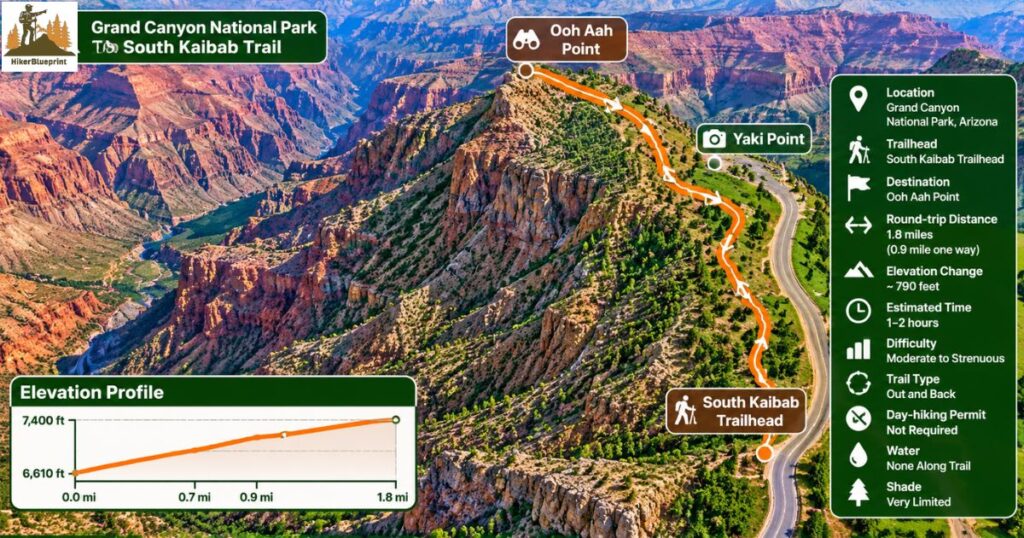
The South Kaibab Trail to Ooh Aah Point is an out-and-back hike in Grand Canyon National Park, Arizona. It starts near Yaki Point Road on the South Rim and follows an exposed ridgeline into the canyon.
| Trail Detail | Information |
|---|---|
| Location | Grand Canyon National Park, Arizona |
| Trailhead | South Kaibab Trailhead |
| Destination | Ooh Aah Point |
| Round-trip distance | 1.8 miles |
| One-way distance | 0.9 mile |
| Elevation change | Approximately 790 feet |
| Estimated time | 1–2 hours |
| Difficulty | Moderate to strenuous |
| Trail type | Out and back |
| Day-hiking permit | Not required |
| Water | None along the trail |
| Shade | Very limited |
The route is short, but the steep descent and uphill return make it more demanding than the mileage suggests.
What the Hike Is Like
Starting at South Kaibab Trailhead
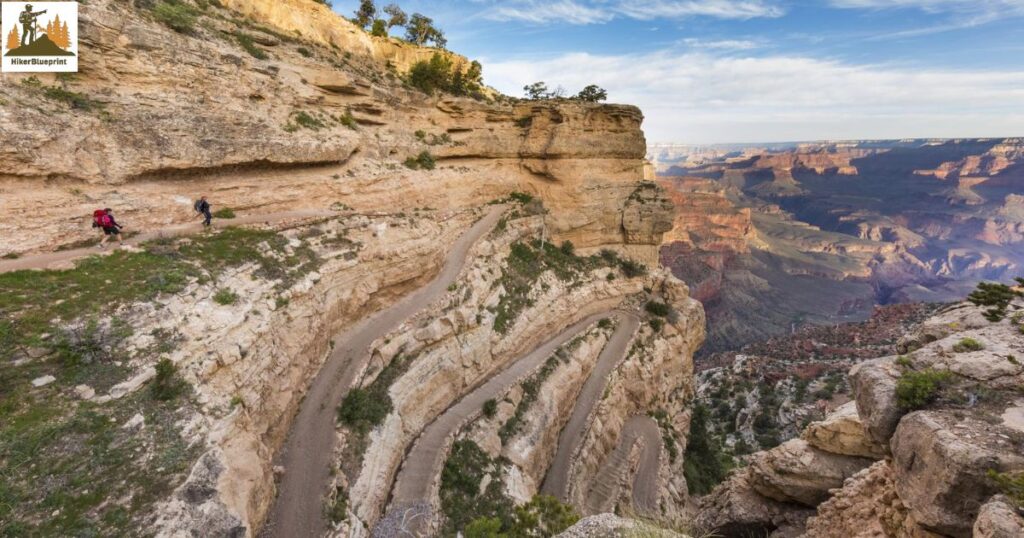
The South Kaibab Trail to Ooh Aah Point begins near the eastern side of the South Rim. From the trailhead, the path quickly descends through a series of tight switchbacks carved into the canyon slope.
As you lose elevation, the views gradually expand. You’ll see layers of red, orange, and cream-colored rock, with the canyon stretching across the horizon. The trail is exposed, so watch your footing and avoid rushing around corners.
Reaching Ooh Aah Point
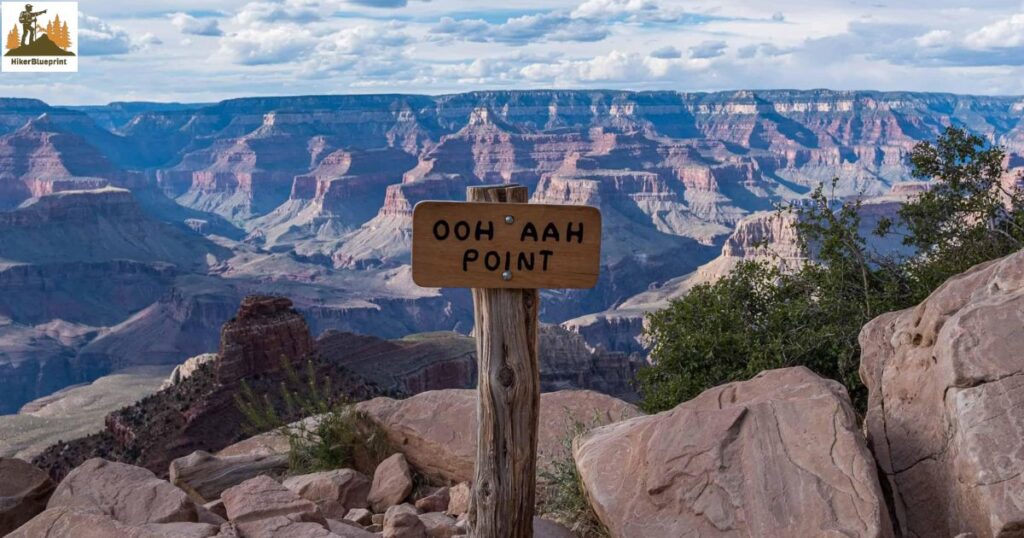
After approximately 0.9 mile, the trail opens onto a broad, exposed viewpoint known as Ooh Aah Point. Its name reflects the reaction many visitors have when the canyon suddenly spreads out before them.
This is a natural stopping and turnaround point rather than a developed overlook. Stay on the established trail, keep a safe distance from the edges, and be careful when taking photographs.
For many first-time canyon hikers, this viewpoint offers a memorable experience without committing to a longer descent.
How Difficult Is the Return Climb?
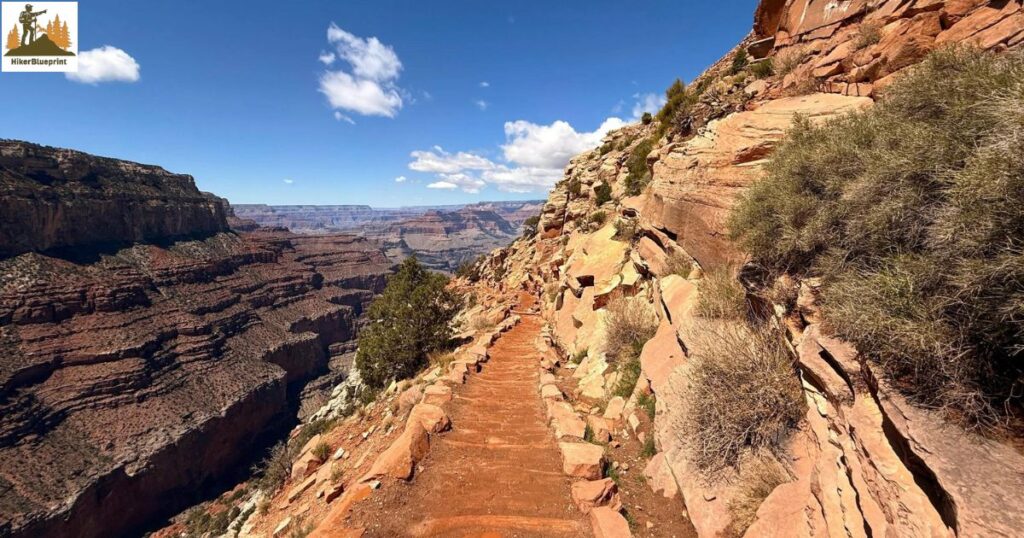
The South Kaibab Trail to Ooh Aah Point involves a relatively short distance but a significant climb back to the rim. The uphill section can feel especially challenging after the descent, when your legs are already tired.
Take breaks when needed, drink regularly, and allow more time for the climb than the descent. If anyone in your group feels dizzy, nauseated, unusually weak, or overheated, stop and reassess rather than continuing downhill.
Trailhead Access, Parking, and Fees
You cannot drive your private vehicle directly to the South Kaibab Trailhead. Park at the Grand Canyon Visitor Center and take the free Kaibab Rim (Orange) shuttle to the trailhead. The ride takes approximately nine minutes.
As of November 2026, the fall shuttle schedule runs from September 12 through November 30. The first bus departs at 6 a.m., with service continuing until one hour after sunset. Check the schedule before your hike because seasonal times change.
A Grand Canyon National Park entrance fee or valid pass is required. No separate permit is needed for this ordinary day hike.
Best Time to Hike and What to Bring
Spring and fall generally offer more comfortable hiking conditions. Early morning is a sensible choice because the exposed route receives intense sunlight, particularly during summer.
Winter and early spring can bring snow and ice to the upper switchbacks. Check trail conditions before starting, and don’t attempt slippery sections without appropriate traction and experience.
Bring:
- Enough drinking water for the entire hike.
- Salty snacks and energy food.
- A hat, sunscreen, and sunglasses.
- Hiking shoes with dependable traction.
- A fully charged phone.
- Trekking poles if you’re comfortable using them.
There is no drinking water anywhere along the trail. Don’t depend on water being available at the trailhead either. Carry what you need before boarding the shuttle.
Helpful Tips Before You Go
A little planning makes the South Kaibab Trail to Ooh Aah Point more enjoyable:
- Start early to avoid the strongest afternoon heat.
- Set a turnaround time before leaving the rim.
- Walk slowly on the descent to reduce strain on your knees.
- Save enough energy and water for the uphill return.
- Check official alerts for closures, weather, and shuttle changes.
For more trip planning, use the Grand Canyon South Rim Map to understand the area, explore Grand Canyon South Rim Day Hikes for other hiking options, and read the Grand Canyon South Rim Itinerary before planning your visit. If you’re comparing canyon routes, the Bright Angel Trail is another popular South Rim option, but its terrain and facilities differ.
Frequently Asked Questions
How long does the hike take?
Most hikers allow 1–2 hours for the 1.8-mile round trip, including time at the viewpoint.
Is it suitable for beginners?
Fit beginners may manage it, but the steep return climb, high elevation, and exposure make preparation important.
Is there water along the route?
No. Carry all the drinking water you’ll need from the start.
Can you drive to the trailhead?
No. Private vehicles aren’t permitted on the trailhead road. Use the park shuttle, walk, or bicycle.
Do you need a hiking permit?
No permit is required for a standard day hike to the viewpoint. Overnight trips below the rim have separate permit requirements.
Conclusion
The South Kaibab Trail to Ooh Aah Point is a rewarding short hike for visitors who want to experience the Grand Canyon beyond its rim overlooks. Its panoramic views come with a steep climb, limited shade, and no trail water.
Start early, carry enough supplies, and check the National Park Service’s latest conditions before setting out. Enjoy the viewpoint, then give yourself plenty of time to climb back safely.

Ahmed Khubaib is a passionate hiker with over 10 years of experience in hiking, camping, and exploring trails solo and with kids.
He shares firsthand experiences, practical hiking tips, and trail guides to help adventurers explore the outdoors safely.