A short rainforest walk leads to one of the most fascinating sights in Hawaiʻi Volcanoes National Park: a cave formed by flowing lava. The Thurston Lava Tube, known by its Hawaiian name Nāhuku, lets visitors step inside a passage once used by molten rock.
The walk is relatively short, but the experience is unlike a typical forest hike. Ferns and native trees surround the entrance, while the dark tunnel reveals how volcanic activity helped shape the Big Island.
Thurston Lava Tube Trail at a Glance
| Trail Detail | Information |
|---|---|
| Hawaiian name | Nāhuku |
| Location | Crater Rim Drive area, Hawaiʻi Volcanoes National Park |
| Difficulty | Moderate |
| Visit duration | 30–90 minutes |
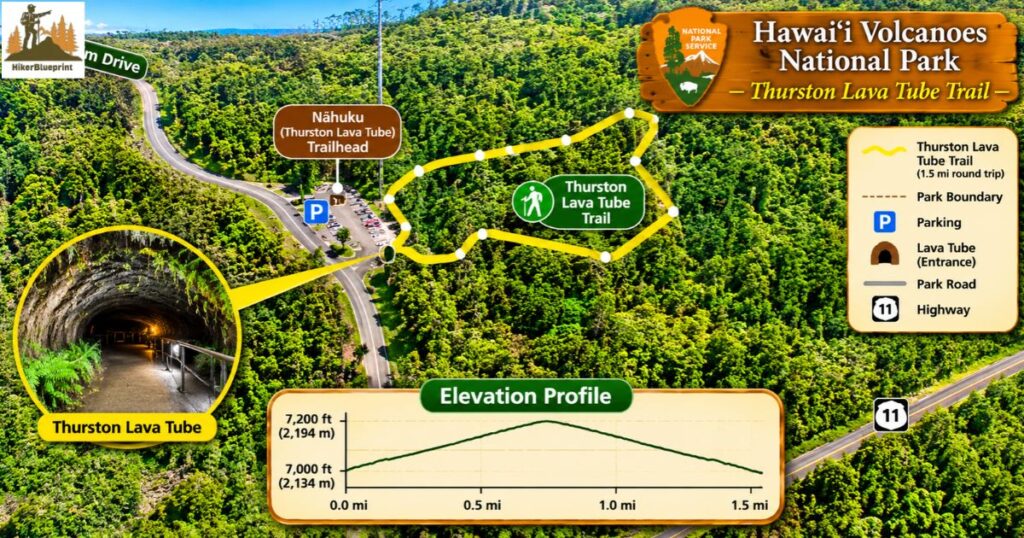
| Distance from Kīlauea Iki Overlook | 1.5 miles (2.4 km) round trip |
| Direct parking | Small Nāhuku parking area |
| Tube lighting | 8 a.m.–8 p.m. daily |
| Reservation | Not required |
| Park entrance fee | Required |
The 1.5-mile distance is the round-trip walk from Kīlauea Iki Overlook, not just the short walk from the roadside parking area. The National Park Service also lists longer approaches from Devastation Trailhead and Puʻupuaʻi. Check the official Nāhuku hiking guide for route details before choosing your starting point.
What Makes Nāhuku Special?
A tunnel formed by flowing lava
A lava tube develops when the outer surface of a lava flow cools and hardens while molten rock continues moving underneath. When the lava supply stops, the remaining molten material drains away, leaving an empty passage.
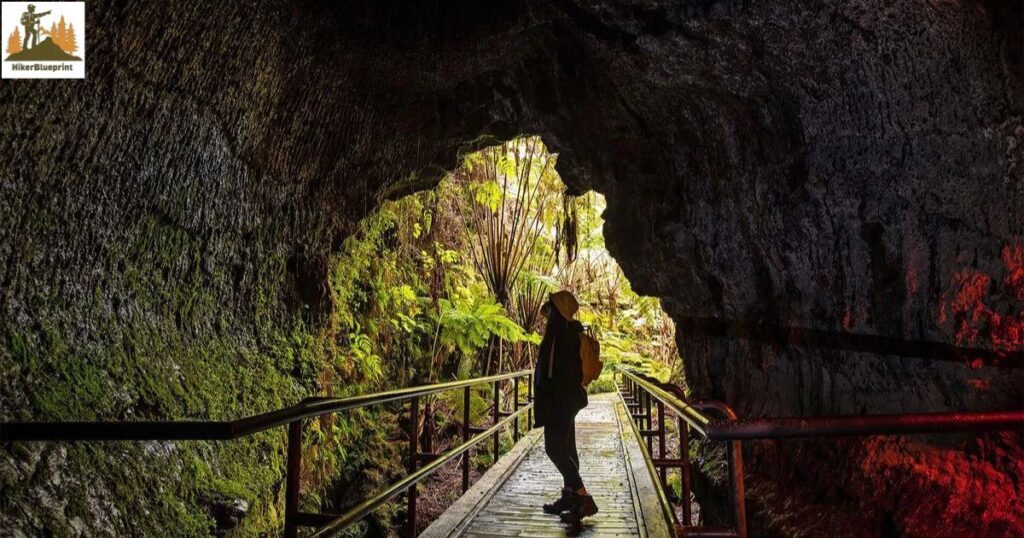
The Thurston Lava Tube formed during an eruption around 500 years ago. Its Hawaiian name, Nāhuku, means “the protuberances,” referring to lava formations that once hung from the ceiling. Many were removed by souvenir collectors after the cave became known to visitors in the early 1900s.
A rainforest approach
Before reaching the cave, you’ll walk through a lush native rainforest filled with ferns, tree roots, and tropical vegetation. The transition from green forest to a dark volcanic passage happens quickly, making this short outing feel like two different experiences.
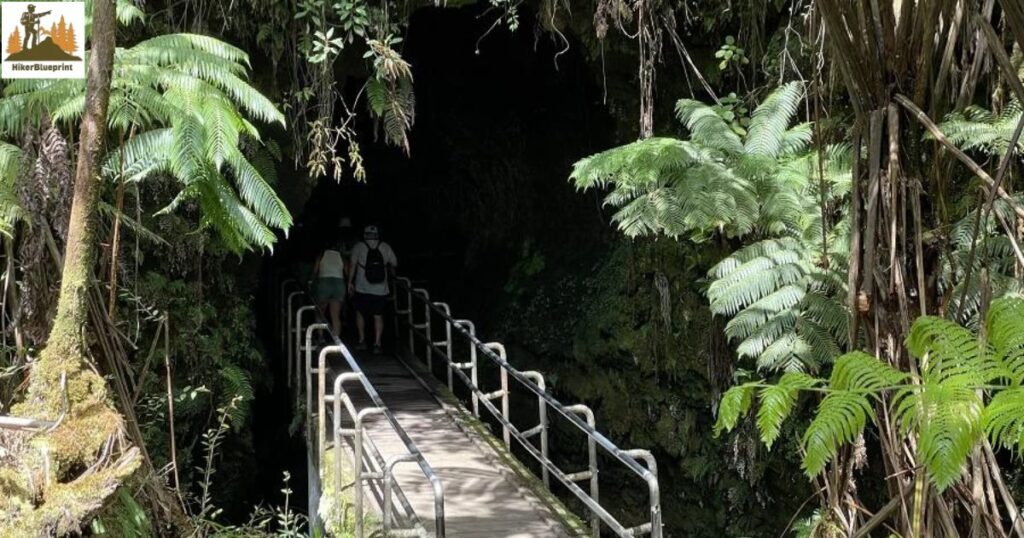
Inside, notice the uneven walls and ceiling, but don’t touch them. Delicate roots hang into parts of the tunnel, and the cave environment is easily damaged. The National Park Service’s lava tube explanation describes how these underground passages form.
How to Reach the Trail
The entrance is along Crater Rim Drive, a short drive from Kīlauea Iki Overlook. A small parking area sits beside the site, with restrooms nearby. Spaces are limited and can fill during busy periods.
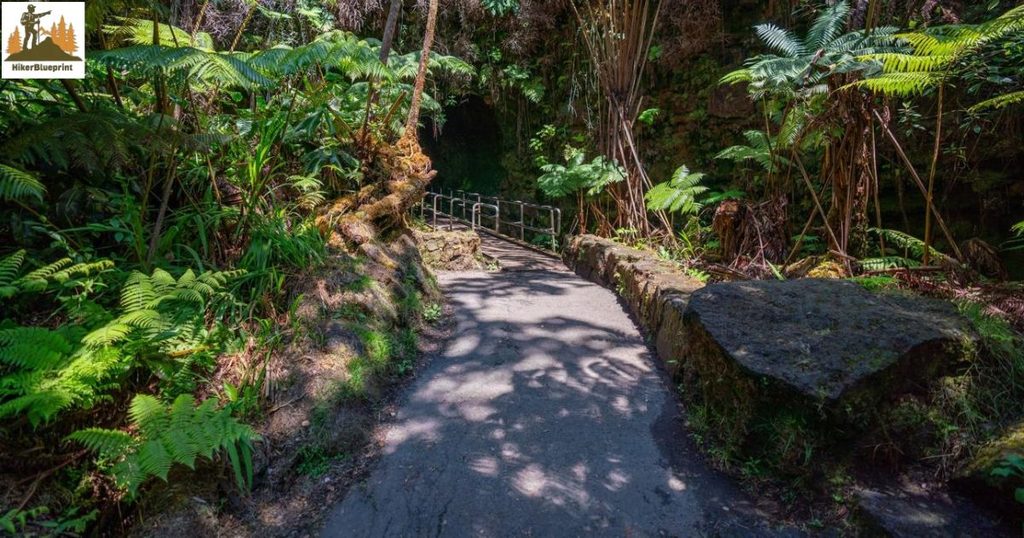
If the lot is full, don’t park along the road or walk beside Crater Rim Drive. Return later or use an established trail connection from Kīlauea Iki Overlook, Devastation Trailhead, or Puʻupuaʻi. These approaches create a longer outing. A Hawaii Volcanoes National Park Map guide can help you plan connections with the Kīlauea Iki Trail and Crater Rim Trail.
Best Time to Visit and Lighting
For a quieter visit, the park recommends arriving before 9 a.m. or after 5 p.m. The cave is accessible beyond those hours, but its installed lighting operates from 8 a.m. to 8 p.m. Bring a flashlight or headlamp outside that window.
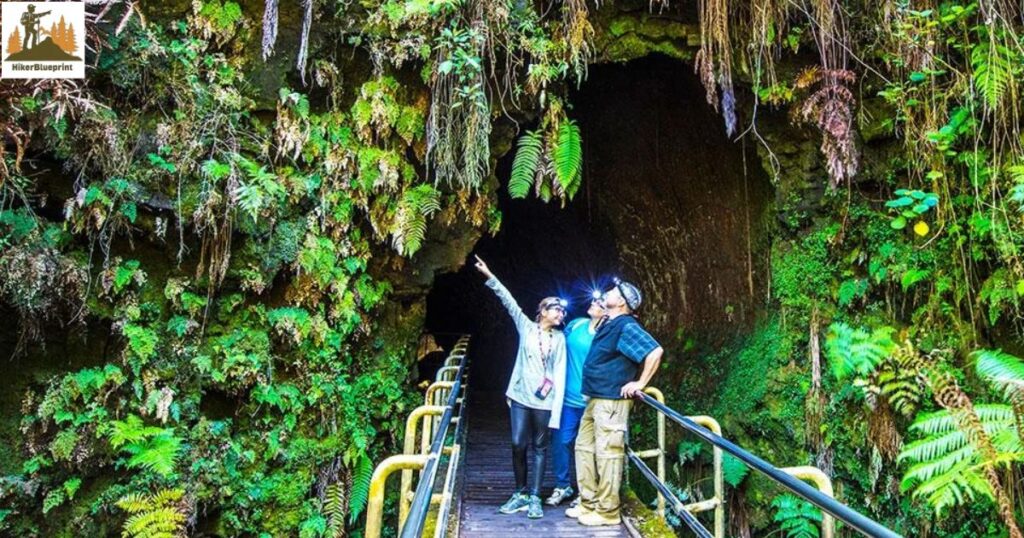
Rain is common in the summit area, and the trail can become slippery. Wear shoes with good traction and bring a light rain layer. Before visiting the Thurston Lava Tube, check the park’s current alerts and conditions for access changes and safety notices.
Safety and Responsible Visiting
The National Park Service warns about rockfall, low ceilings, standing water, and tripping hazards inside the cave. Watch your head, move carefully, and turn around if conditions feel unsafe. Don’t climb on formations or explore unmarked passages.
Protect the surrounding forest, too. Stay on established paths and clean your footwear before and after visiting forest areas to help prevent the spread of Rapid ʻŌhiʻa Death. Never touch the cave walls or hanging roots.
Nearby Hikes to Add to Your Visit
You can pair the cave with a longer outing if you have enough time. The Kīlauea Iki Trail crosses a hardened lava lake, while the Crater Rim Trail follows sections of the summit caldera. For more ideas, explore Best Hikes in Hawaii and use a Hawaii Volcanoes National Park itinerary to organize nearby stops.
Fees and Reservations
There is no separate fee or reservation for the cave, but the park entrance fee applies. The standard pass currently costs $30 per private vehicle, $25 per motorcycle, or $15 per person entering on foot or bicycle. The park is cashless, so bring an accepted payment card or arrange your pass ahead of time.
Frequently Asked Questions
How long does the Thurston Lava Tube visit take?
Allow approximately 30–90 minutes, depending on your starting point and how long you explore.
Do you need a flashlight?
Not during the 8 a.m. to 8 p.m. lighting period. Carry one outside those hours.
Is the walk suitable for children?
It may appeal to families, but low ceilings, wet ground, and uneven footing require close supervision.
Can you touch the lava formations?
No. Avoid touching the walls and hanging roots to protect this fragile environment.
Final Thoughts
The Thurston Lava Tube Trail is a memorable stop in Hawaiʻi Volcanoes National Park. Its rainforest approach and underground passage offer a fascinating glimpse into the island’s volcanic origins. Arrive early for a better chance at parking, wear shoes with traction, and check current park conditions before setting out.

Ahmed Khubaib is a passionate hiker with over 10 years of experience in hiking, camping, and exploring trails solo and with kids.
He shares firsthand experiences, practical hiking tips, and trail guides to help adventurers explore the outdoors safely.