The Crater Rim Trail follows the edge of Kaluapele, the summit caldera of Kīlauea, through a landscape shaped by eruptions, steam, and rainforest. It is not one fixed-length loop. Instead, connected sections let you choose a short viewpoint walk or a longer outing along the volcanic rim.
That flexibility is useful, but access can change after eruptions, storms, or construction. Check current park notices before choosing your route.
Key Takeaways
- The trail follows Kīlauea’s summit caldera from Uēkahuna toward Keanakākoʻi Crater.
- Total distance and elevation gain depend on the section you choose.
- Access points include Uēkahuna, Kīlauea Overlook, Steam Vents, and Volcano House.
- Surfaces range from pavement and gravel to uneven ground and stairs.
- Stay well back from cliffs, cracks, and steam vents.
Crater Rim Trail at a Glance
| Detail | Information |
|---|---|
| Location | Hawaiʻi Volcanoes National Park, Big Island |
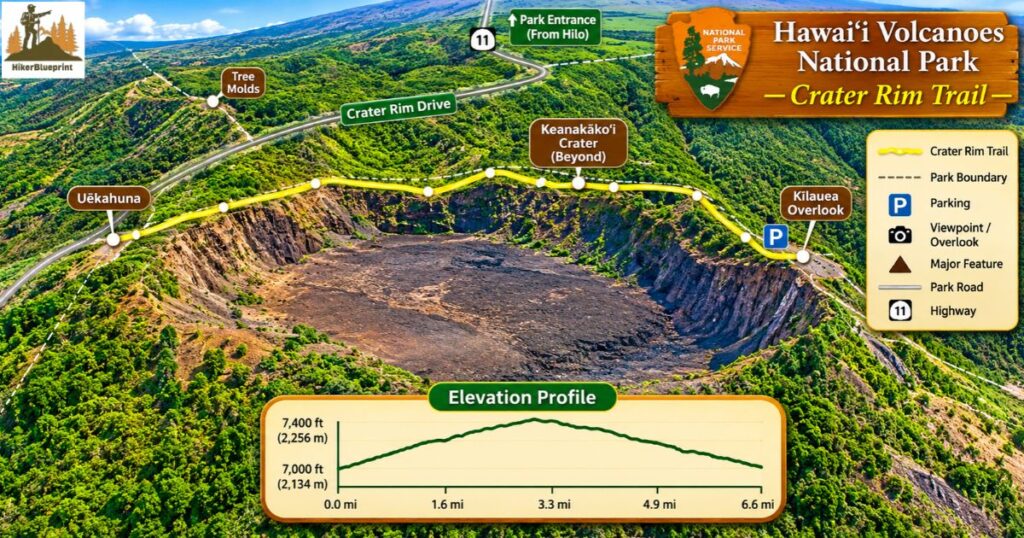
| Route | Along Kaluapele, from Uēkahuna to beyond Keanakākoʻi Crater |
| Distance | Variable by section; no single full-route distance |
| Elevation gain | Variable; no single official figure for the full route |
| Difficulty | Easy overall, according to NPS |
| Time | About 1–6 hours, depending on distance |
| Surface | Paved sections, gravel, uneven ground, stairs |
| Permit | No separate hiking permit or reservation |
| Fee | Park entrance pass required |
The easy rating in the official Crater Rim Trail hiking guide doesn’t describe every stretch. Uneven ground, inclines, and stairs can challenge visitors with mobility limitations. Use the Hawaii Volcanoes National Park Map guide to plan your access.
Route Highlights Along the Caldera
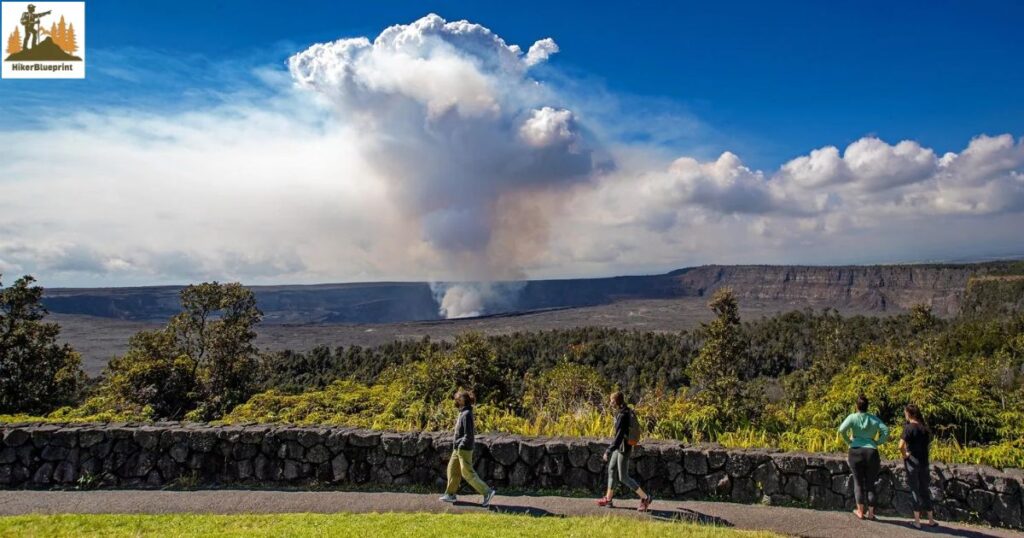
Along the Crater Rim Trail, views change between open overlooks, steam vents, rainforest, and areas reshaped by the 2018 summit collapse. Exposed volcanic ground gives way to greener forest.
Uēkahuna and the Northern Rim
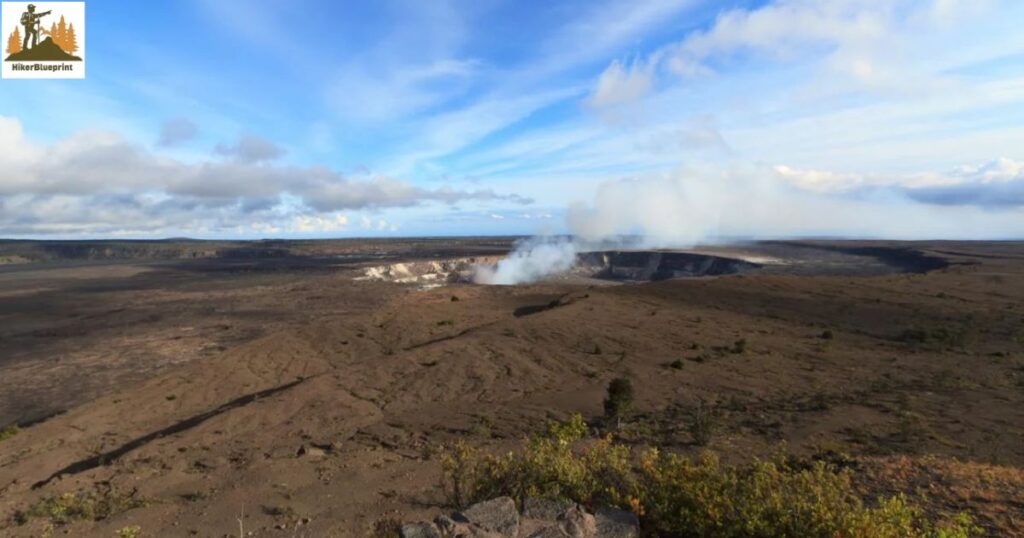
Uēkahuna, on the northwestern caldera rim, offers broad views into Kaluapele and is a useful western starting point. Check notices before continuing because construction, eruptions, and safety closures can affect access.
Volcano House, Steam Vents, and Kūpinaʻi Pali
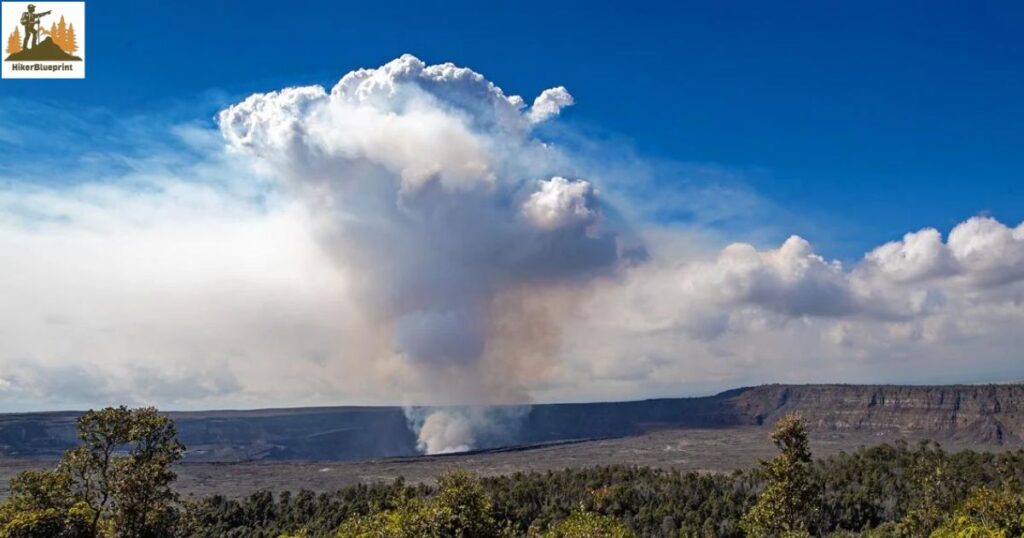
Near Volcano House, the route connects with Halemaʻumaʻu Trail, which descends toward the caldera floor. Steam Vents releases volcanic gases, while Kūpinaʻi Pali is also known as Waldron Ledge. Stay on marked paths and away from steaming ground.
Keanakākoʻi Crater
The eastern section passes Keanakākoʻi Crater, a feature associated with traditional Hawaiian stone toolmaking. Part of old Crater Rim Drive beyond the vehicle closure is open to pedestrians and cyclists. From Devastation Trailhead, the walk to the crater is about 1 mile each way, or 2 miles round trip. This is a defined out-and-back option, not the distance for the entire rim route. Read the Keanakākoʻi Crater trail information for this specific walk.
Starting Points and Route Planning
NPS lists access points at Uēkahuna, Kīlauea Overlook, Steam Vents, and Volcano House. Choose a Crater Rim Trail section based on the views you want, then check the map and current notices. Don’t assume you can walk a continuous loop around the caldera.
The Kīlauea Iki Trail and Thurston Lava Tube offer separate hiking experiences nearby. If you’re comparing walks across the island, consult Best Hikes in Hawaii. You can also use a Hawaii Volcanoes National Park itinerary to fit this hike around other open areas without rushing.
Best Time to Hike and What to Bring
Kīlauea’s summit is around 4,000 feet and can be cool, rainy, and windy when the coast is warm. Expect sudden showers or gusts.
Bring water, snacks, sturdy shoes, rain gear, and sun protection. Exposed stretches offer little shelter, so allow time for safe stops at overlooks.
Safety, Closures, and Fees
Cliffs, earth cracks, and steam vents have unstable or slippery edges. Stay on marked paths, keep back, and never cross barriers. Volcanic gas can affect people with respiratory or heart conditions.
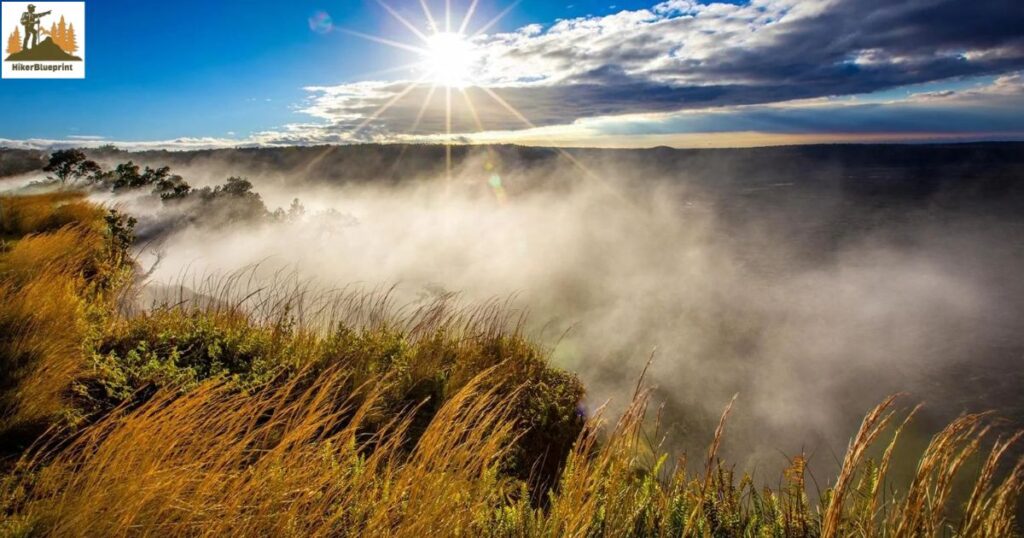
Check the park’s current alerts and conditions before departure. Construction and volcanic activity can change access with little notice. The entrance fee is $30 per private vehicle, $25 per motorcycle, or $15 per person arriving on foot or bicycle. Confirm prices on the park entrance fees and passes page. The park is cashless. There is no separate activity fee or hiking reservation.
Frequently Asked Questions
How long is the hike?
There is no single total distance. Choose a section and check its distance before starting.
Is it suitable for beginners?
Many Crater Rim Trail sections are rated easy, but uneven surfaces, stairs, exposure, and changing weather may challenge some hikers.
Can you hike the entire caldera rim?
Not as one straightforward loop. The route is variable, and closures or gaps can prevent a continuous walk.
Are dogs allowed?
No. Pets are not allowed on this trail.
Do you need a permit?
No separate hiking permit or reservation is required, but visitors need a valid park entrance pass.
Final Thoughts
The Crater Rim Trail is best treated as a collection of volcanic-rim walks, not a single fixed-distance hike. Choose a Crater Rim Trail section that suits your time and ability, check park notices, and keep a safe distance from the caldera’s hazards.

Ahmed Khubaib is a passionate hiker with over 10 years of experience in hiking, camping, and exploring trails solo and with kids.
He shares firsthand experiences, practical hiking tips, and trail guides to help adventurers explore the outdoors safely.