2-Day Zion National Park can deliver an incredible outdoor experience if you plan your time wisely. From towering sandstone cliffs and peaceful riverside walks to adventurous slot canyon hikes, Zion offers something special around almost every corner.
However, visiting for the first time can feel overwhelming. There are multiple hiking trails, seasonal shuttle schedules, limited parking, permit requirements, and different areas worth exploring. Without a sensible plan, you could spend more time dealing with transportation than enjoying the scenery.
That’s where this 2-Day Zion Itinerary comes in.
Instead of rushing through every attraction, this guide organizes your visit into two manageable days. The first day focuses on Zion Canyon’s famous hiking trails and scenic highlights. The second day explores The Narrows, the spectacular eastern section, and additional viewpoints.
You’ll also find practical information about entrance fees, parking, shuttle transportation, accommodation, seasonal conditions, and hiking difficulty.
Whether you’re traveling from Las Vegas, exploring Utah’s national parks, or visiting with your family, this 2-Day Zion Itinerary will help you make the most of your time.
2-Day Zion Itinerary: Essential Planning Information
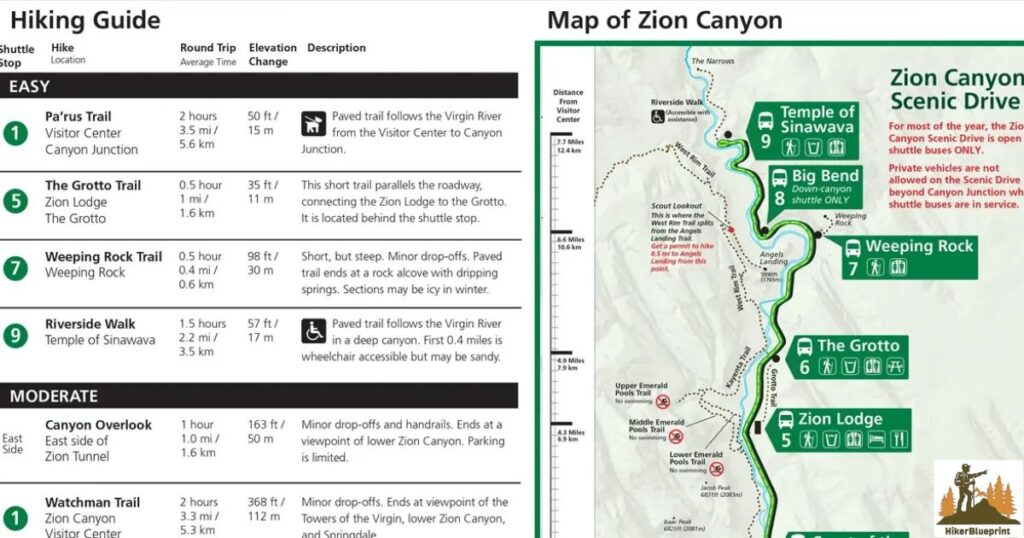
Before choosing your hiking trails, understand how Zion works. Transportation, trail accessibility, and seasonal conditions can significantly influence your schedule.
Here’s a quick overview to help organize your visit.
| Planning Detail | Information |
|---|---|
| Destination | Zion National Park, Utah |
| Nearest town | Springdale |
| Recommended duration | 2 full days |
| Best seasons | Spring and fall |
| Main entrance | South Entrance |
| Park operating hours | Open 24 hours daily |
| Private vehicle entrance fee | $35 |
| Motorcycle entrance fee | $30 |
| Individual pedestrian entrance | $20 |
| Nonresident additional fee | $100 per qualifying international visitor |
| Park shuttle | Free when operating |
| Shuttle reservation | Not required |
| Angels Landing permit | Required |
| The Narrows day-hike permit | Not normally required for bottom-up hiking |
| Recommended accommodation | Springdale or Watchman Campground |
The standard private vehicle entrance pass costs $35 and covers occupants of a noncommercial vehicle with up to 15 passengers. It remains valid for seven consecutive days.
International visitors aged 16 and older should also account for the additional $100 nonresident fee unless covered by an eligible annual or America the Beautiful pass.
Check the official Zion entrance fees and passes before departure because park policies and charges can change.
Recommended 2-Day Zion Itinerary Schedule
This schedule provides a realistic framework for exploring the park without exhausting yourself.
| Time | Day 1: Zion Canyon | Day 2: Narrows and East Side |
|---|---|---|
| 6:30–7:30 AM | Arrive and park | Early breakfast |
| 7:30–8:30 AM | Enter Zion Canyon | Travel toward chosen trail |
| 8:30 AM–12 PM | Angels Landing, Scout Lookout, or Emerald Pools | The Narrows or Canyon Overlook |
| 12–1 PM | Lunch at Zion Lodge | Lunch and rest |
| 1–3 PM | Riverside Walk | Zion-Mount Carmel Highway |
| 3–4 PM | Court of the Patriarchs | Checkerboard Mesa |
| 4–6 PM | Relax and explore Springdale | Additional scenic stops |
Planning note: The schedule is flexible. If you choose Angels Landing or The Narrows, allow additional time for challenging terrain, changing conditions, and breaks.
Before You Start: Understand Zion’s Transportation System
Transportation is one of the biggest factors affecting a successful visit.
Zion Canyon has limited parking, and its busiest areas receive substantial visitor traffic. During shuttle season, private vehicles cannot drive along Zion Canyon Scenic Drive.
Instead, visitors use the free National Park Service shuttle system.
Zion Canyon and Springdale Shuttle Routes
There are two main shuttle services.
Zion Canyon Shuttle: This service operates inside the park, connecting the visitor center with popular locations such as Zion Lodge, The Grotto, and Temple of Sinawava.
Springdale Shuttle: This route connects various locations in Springdale with the park’s pedestrian entrance.
You don’t need a reservation or ticket to ride either shuttle. However, you must have a valid park entrance pass.
For October 25 through November 28, 2026, the published schedule is:
| Shuttle Service | First Departure | Last Departure |
|---|---|---|
| Zion Canyon Visitor Center | 7:00 AM | 5:00 PM |
| Temple of Sinawava | Check return schedule | 6:15 PM |
| Springdale Line | 8:00 AM | 6:00 PM |
The shuttle journey between the visitor center and Temple of Sinawava takes approximately 45 minutes each way.
Important: From November 29 through December 25, 2026, scheduled shuttle service is suspended. During this period, private vehicles can generally access Zion Canyon Scenic Drive, subject to road restrictions and closures.
Check the official Zion shuttle schedule for your exact travel dates.
Where to Park in Zion
The Zion Canyon Visitor Center has the park’s largest parking lot, with more than 350 spaces.
Parking is free, but spaces are available on a first-come, first-served basis.
During busy seasons, arrive early. If the visitor center lot fills up, consider parking in designated areas in Springdale and using the town shuttle.
Never park along unauthorized roadside areas or block traffic.
For a detailed overview, consult the official Zion parking and transportation information.
Day 1 of 2-Day Zion Itinerary: Explore Zion Canyon’s Most Famous Attractions
Your first day should focus on Zion Canyon.
This area contains many of the park’s most recognizable landscapes, including towering sandstone cliffs, dramatic hiking trails, and beautiful views of the Virgin River.
For most first-time visitors, it’s the best place to begin.
A well-organized 2-Day Zion Itinerary should dedicate enough time to this section rather than constantly moving between distant areas.
Morning: Choose Your Main Hiking Adventure
Start early and choose one major hike based on your fitness and experience.
There are several excellent options, but three stand out for a first visit.
| Trail | Round-Trip Distance | Elevation Gain | Difficulty | Estimated Time |
|---|---|---|---|---|
| Angels Landing | 5.4 miles | Approximately 1,500 feet | Strenuous | 4–5 hours |
| Scout Lookout | 4.2 miles | Approximately 1,000 feet | Strenuous | 3–4 hours |
| Lower Emerald Pools | 1.2 miles | 150 feet | Easy | Around 1 hour |
| Riverside Walk | 2.2 miles | 57 feet | Easy | Around 1.5 hours |
| Watchman Trail | 3.3 miles | 368 feet | Moderate | Around 2 hours |
Distances and elevation figures are approximate. Actual hiking times depend on trail conditions, crowds, and individual fitness.
Option 1: Angels Landing
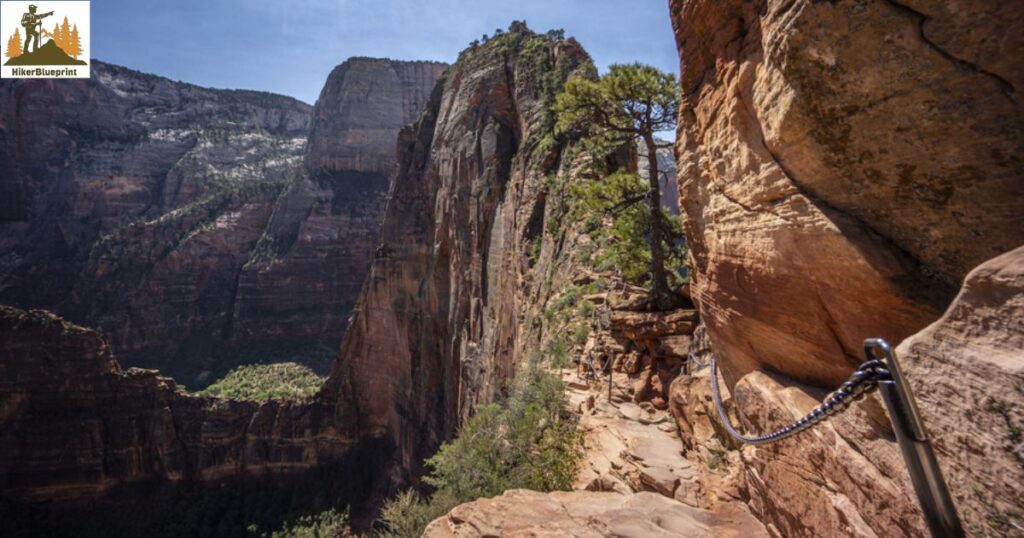
Angels Landing is among Zion’s most famous hiking destinations.
The trail climbs high above Zion Canyon, eventually reaching a narrow sandstone ridge with spectacular views.
The final section includes steep drop-offs and fixed chains.
It’s an unforgettable experience for appropriately prepared hikers, but it isn’t suitable for everyone.
The full route covers approximately 5.4 miles round trip and gains around 1,500 feet.
Allow four to five hours, potentially longer during crowded periods.
You must obtain an Angels Landing permit before hiking beyond Scout Lookout.
The National Park Service operates seasonal and day-before lotteries.
The day-before lottery opens at 12:01 AM and closes at 3:00 PM Mountain Time on the day before your planned hike.
The application costs $6, with an additional $3 per person for successful applicants.
Read the official Angels Landing permit instructions before applying.
If you don’t receive a permit, you can still hike to Scout Lookout. This provides impressive canyon views without entering the restricted chain section.
For visitors who prefer less exposure, explore 7 Best Angels Landing Alternatives when planning other challenging but potentially more comfortable hiking experiences.
Option 2: Scout Lookout
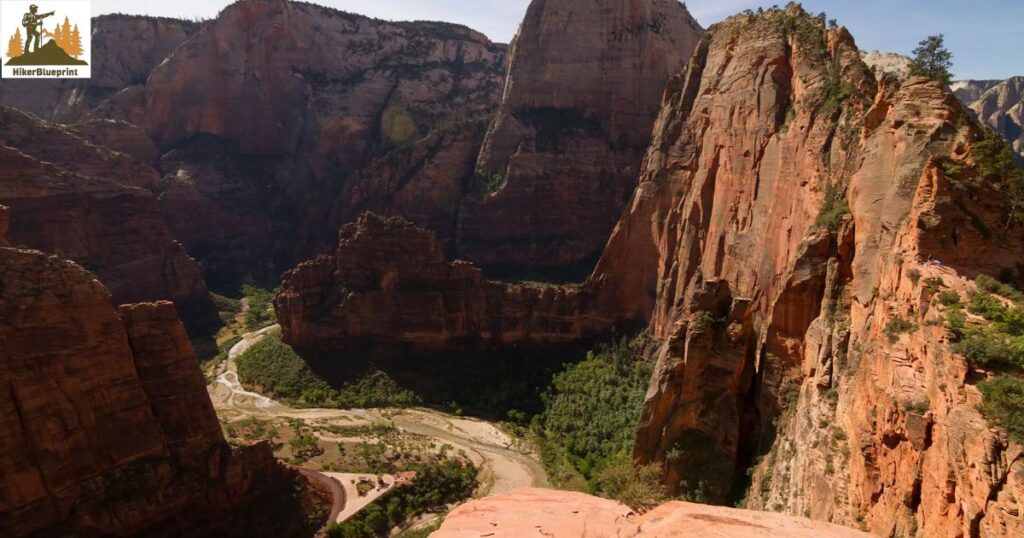
Scout Lookout is an excellent alternative for visitors who want a demanding hike without completing Angels Landing.
The route follows the West Rim Trail from The Grotto.
You’ll climb steep switchbacks, pass through Refrigerator Canyon, and eventually reach Walter’s Wiggles.
These famous switchbacks lead toward Scout Lookout, where the scenery opens dramatically.
The hike covers approximately 4.2 miles round trip, with around 1,000 feet of elevation gain.
It’s still a strenuous hike, with significant exposure in some areas.
You don’t need an Angels Landing permit to reach Scout Lookout, provided you stop before the restricted chain section.
Option 3: Emerald Pools
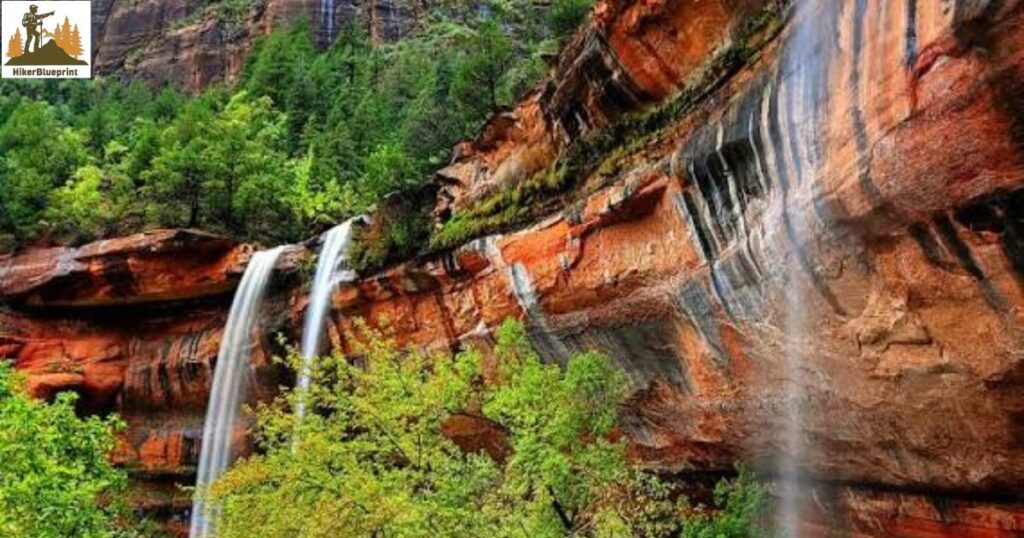
If you’re visiting with children, inexperienced hikers, or anyone who prefers gentler terrain, Emerald Pools is worth considering.
The area includes Lower, Middle, and Upper Emerald Pools.
The Lower Emerald Pool Trail is approximately 1.2 miles round trip and gains around 150 feet.
It’s a relatively easy walk with beautiful scenery.
Visitors looking for additional exercise can continue toward Middle and Upper Emerald Pools.
However, these extensions involve more climbing and uneven terrain.
Swimming is not permitted in the pools.
For a relaxed first day, this is one of the most practical choices in the park.
Midday: Enjoy Lunch at Zion Lodge
After your morning hike, take a proper break.
Zion Lodge is conveniently located inside Zion Canyon and offers dining facilities, restrooms, and access to nearby hiking trails.
You can enjoy lunch while surrounded by Zion’s impressive sandstone formations.
Alternatively, pack your own food and enjoy a designated picnic area.
If you’re following this 2-Day Zion Itinerary, don’t underestimate the value of a proper midday break.
Your second day may involve another substantial hiking adventure, so conserving energy matters.
Afternoon: Walk the Riverside Trail
After lunch, head toward Temple of Sinawava and explore Riverside Walk.
This paved trail follows the Virgin River through an increasingly narrow canyon.
The route covers approximately 2.2 miles round trip according to the National Park Service’s 2026 information guide.
It gains around 57 feet, making it a relatively easy experience for most visitors.
The walk usually takes approximately 1–1.5 hours.
Along the way, you’ll see lush vegetation, flowing water, and towering sandstone walls.
The trail eventually reaches the entrance to The Narrows.
If you don’t want to hike through the river, simply enjoy the paved route and return to the shuttle stop.
Late Afternoon: Court of the Patriarchs
Court of the Patriarchs is another worthwhile stop.
This viewpoint showcases three enormous sandstone formations named Abraham, Isaac, and Jacob.
The short walk from the shuttle stop makes it convenient to include after Riverside Walk.
You don’t need much time here, but the views are particularly attractive for photography.
Finish your first day with a relaxed evening in Springdale.
Explore local restaurants, replenish your supplies, and get some rest before day two.
Day 2: Experience The Narrows and Zion’s Eastern Landscapes
The second day introduces a different side of Zion.
While the first day focuses on classic canyon trails, day two combines an adventurous river hike with the scenic landscapes along the Zion-Mount Carmel Highway.
Your exact activities should depend on weather, water conditions, and the amount of hiking you completed previously.
This part of the 2-Day Zion Itinerary is particularly flexible.
You can choose between a challenging water hike and a completely dry alternative.
Morning Option A: Hike The Narrows
The Narrows is one of Zion’s most distinctive hiking experiences.
Instead of following an ordinary trail, you’ll walk through the Virgin River between towering canyon walls.
The bottom-up route begins at Temple of Sinawava.
First, follow Riverside Walk to the river entrance. From there, the hiking route continues directly through the water.
The experience is beautiful, but conditions must be suitable.
The riverbed contains slippery, uneven rocks, and water depth changes throughout the route.
You may encounter water reaching your knees or waist, with deeper sections possible.
There is no fixed turnaround distance for the ordinary bottom-up day hike.
Choose a manageable distance and return while you still have sufficient energy.
Important safety information:
- Check river levels before departure.
- Review flash-flood forecasts.
- Avoid entering narrow canyons when dangerous weather threatens.
- Wear appropriate footwear.
- Carry suitable clothing for water temperatures.
- Never drink untreated river water.
- Turn around before becoming exhausted.
The National Park Service closes The Narrows when the Virgin River exceeds its established flow threshold of 150 cubic feet per second or when a Flash Flood Warning is issued.
Closures and conditions can change quickly.
Check the official Narrows safety information before entering.
A standard bottom-up day hike doesn’t require a wilderness permit, although certain longer overnight or top-down routes do.
Morning Option B: Canyon Overlook Trail
If you’d rather stay dry, Canyon Overlook Trail is an excellent alternative.
The trail sits along the Zion-Mount Carmel Highway, east of the main canyon.
It’s approximately one mile round trip, with around 150–163 feet of elevation gain.
Most visitors need approximately 30–60 minutes.
The route includes uneven rocky surfaces, steps, and exposed sections.
The final viewpoint provides beautiful views of Pine Creek Canyon and lower Zion Canyon.
Parking is extremely limited near the trailhead.
Arrive early and never park outside designated spaces.
This trail isn’t served by the regular Zion Canyon shuttle, so you’ll need suitable vehicle access.
Explore the Zion-Mount Carmel Highway
After your morning activity, spend some time exploring the eastern section of the park.
The Zion-Mount Carmel Highway is one of the most scenic driving routes in the region.
It connects Zion Canyon with the park’s East Entrance.
Along the way, you’ll encounter striking sandstone formations, impressive geological features, and scenic pullouts.
The road offers a noticeably different landscape from the main canyon.
However, large vehicles face restrictions on the section between Canyon Junction and the East Entrance.
Check vehicle-size requirements before planning this drive with an RV or trailer.
Stop at Checkerboard Mesa
Checkerboard Mesa is one of the most recognizable geological features along the eastern route.
Its sandstone surface displays unusual horizontal and vertical patterns.
These formations developed through natural weathering and erosion over long periods.
A designated roadside area provides an opportunity to stop, photograph the formation, and appreciate the surrounding landscape.
You don’t need a major hike to enjoy this attraction.
It’s an excellent addition to a relaxed second day.
Afternoon: Enjoy More Scenic Stops
Depending on your available time, consider adding a few more short stops.
The eastern section has several attractive viewpoints and roadside locations.
Avoid trying to visit every pullout. Some are small, and stopping repeatedly can make your afternoon feel rushed.
Instead, choose a few locations that interest you most.
If you’re interested in expanding your trip, consider exploring Grand Canyon South Rim destinations or planning a separate adventure around Hetch Hetchy Hiking.
These are better treated as additional trips rather than squeezed into your two-day Zion visit.
Best Time to Follow This 2-Day Zion Itinerary
Zion is open throughout the year, but each season creates a different experience.
Your choice of travel dates can influence hiking difficulty, shuttle operations, water conditions, and accommodation availability.
Spring: March Through May
Spring is one of the most popular periods for visiting Zion.
Temperatures are often comfortable for hiking, and the landscape becomes especially attractive.
However, snowmelt can increase river levels.
This sometimes makes The Narrows inaccessible.
If you’re planning a spring visit, have a dry hiking alternative ready.
Summer: June Through August
Summer offers long daylight hours and generally convenient access to popular attractions.
However, temperatures in Zion Canyon can exceed 100°F.
Start hiking early and avoid strenuous activities during the hottest part of the day.
Summer also overlaps with the monsoon season, which increases flash-flood risks.
Be especially careful when considering The Narrows.
Fall: September Through November
Fall offers comfortable hiking temperatures and beautiful scenery.
September can remain warm, while October and November generally bring cooler conditions.
It’s an excellent season for combining canyon hikes with scenic driving.
However, shuttle schedules become shorter as the season progresses.
Check the timetable carefully before planning your evenings.
Winter: December Through February
Winter offers fewer crowds and a quieter atmosphere.
Snow sometimes covers the surrounding cliffs, creating beautiful scenery.
However, icy trails, cold mornings, and shorter daylight hours require additional preparation.
The regular shuttle service has a seasonal interruption from November 29 through December 25, 2026.
During this period, private vehicles can generally access Zion Canyon Scenic Drive, subject to park restrictions and road conditions.
Where to Stay During Your 2-Day Zion Visit
Choosing accommodation near the park can make your visit considerably easier.
Springdale is the most convenient base for exploring Zion Canyon.
It offers hotels, restaurants, grocery stores, and access to the Springdale shuttle.
Other options include:
| Location | Best For | Main Advantage |
|---|---|---|
| Springdale | First-time visitors | Close to the South Entrance |
| Zion Lodge | Visitors wanting to stay inside the park | Central canyon location |
| Watchman Campground | Campers | Near the South Entrance |
| Hurricane | Budget-conscious travelers | Additional accommodation choices |
| St. George | Longer road trips | More restaurants and lodging options |
Watchman Campground operates year-round, although reservations are required.
South Campground and Lava Point Campground have seasonal operating schedules.
Check the official Zion campground information before booking.
Zion Lodge is the only hotel-style accommodation inside the park.
It offers convenient access to canyon attractions, but availability can be limited.
For most first-time visitors, staying in Springdale provides an excellent balance of convenience and flexibility.
How to Reach Zion National Park
Zion is located in southwestern Utah.
The South Entrance near Springdale is the most convenient access point for visitors exploring the main canyon.
Approximate driving distances include:
| Starting Point | Distance | Driving Time |
|---|---|---|
| Las Vegas, Nevada | 160 miles | 2.5–3 hours |
| St. George, Utah | 42 miles | 45–60 minutes |
| Salt Lake City, Utah | 310 miles | 4.5–5 hours |
| Bryce Canyon National Park | 85 miles | 1.5–2 hours |
| Page, Arizona | 120 miles | 2–2.5 hours |
Driving times depend on traffic, road conditions, and your precise starting point.
Las Vegas is a particularly convenient starting point for visitors planning a southern Utah road trip.
If you’re visiting several national parks, you might also consider Bryce Canyon and the Grand Canyon.
A separate trip could include Yosemite Reservation planning, Yosemite Easy Hikes With Kids, or challenging hikes such as Half Dome.
These destinations require separate planning and shouldn’t be treated as nearby stops during a short Zion visit.
What to Pack for 2-Day Zion Visit
You don’t need an enormous backpack for a 2-day Zion visit, but preparation matters.
Pack according to the activities you plan to complete.
Essential Items
- Drinking water.
- Comfortable hiking shoes.
- Lightweight backpack.
- Sunscreen.
- Sunglasses and a hat.
- Snacks and packed lunches.
- Weather-appropriate clothing.
- Offline maps.
- Portable phone charger.
- Basic first-aid supplies.
- Headlamp or flashlight.
For summer hiking, carry sufficient water and plan around extreme temperatures.
For The Narrows, bring suitable water-hiking footwear and clothing appropriate for the season.
A walking stick can also help with balance on slippery river rocks.
If you’re hiking during winter, consider additional insulation and traction equipment when conditions require it.
Common Mistakes to Avoid During a 2-Day Zion Trip
Even a carefully planned visit can become stressful when you overlook important details.
Here are several mistakes worth avoiding.
Trying to complete too many major hikes: Choose one substantial hiking adventure each day rather than attempting everything.
Arriving late: Early arrival improves your chances of finding parking and enjoying quieter trails.
Ignoring shuttle schedules: Always know when the final shuttle leaves your destination.
Assuming The Narrows is always open: River levels and flash-flood warnings can cause closures.
Forgetting Angels Landing permits: You cannot hike the restricted chain section without authorization.
Underestimating travel time: Shuttle journeys and road access between park sections take longer than many first-time visitors expect.
Not checking trail closures: Some routes may be inaccessible because of rockfalls, maintenance, or other hazards.
Before departure, review the official Zion current conditions page.
Frequently Asked Questions
Is 2-day Zion visit enough to explore National Park?
Yes. 2-day Zion visit provide enough time to experience several major attractions, complete selected hikes, and explore the eastern section.
What is the best month to visit Zion?
April, May, September, and October are generally excellent months for comfortable hiking, although seasonal conditions vary.
Do I need reservations to enter Zion?
Generally, no timed-entry reservation is required. However, you need a valid entrance pass, and certain activities require separate permits.
Can beginners enjoy the park?
Absolutely. Riverside Walk, Pa’rus Trail, and Lower Emerald Pools offer accessible alternatives to strenuous hikes.
Is Angels Landing worth hiking?
It offers spectacular views, but the exposed chain section requires a permit and a strong comfort level with heights.
Can I hike The Narrows without a permit?
Yes. A wilderness permit isn’t normally required for the standard bottom-up day hike from Temple of Sinawava, subject to closures.
Where should I stay for two days?
Springdale is generally the most convenient choice because of its proximity to the South Entrance, restaurants, accommodation, and shuttle access.
Final Thoughts: 2-Day Zion Itinerary
Zion is a destination that deserves more than a rushed visit.
Two days give you an excellent opportunity to experience its famous canyon scenery, explore beautiful hiking trails, and discover the eastern landscapes.
The secret to a successful 2-Day Zion Itinerary is choosing activities that complement each other.
Spend your first day exploring Zion Canyon. Use the second day for The Narrows or a dry hiking alternative, followed by a scenic drive along the eastern side.
Most importantly, remain flexible.
Check current park conditions, plan around shuttle operations, and respect trail restrictions.
You don’t need to complete every hike to enjoy Zion. Sometimes the best part of a national park visit is simply slowing down, appreciating the scenery, and enjoying the experience.
You may also like this:
Hiking the Window Trail in Big Bend National Park: Complete Guide
Best Time to Visit Yosemite National Park: Weather, Crowds, and Seasonal Guide
Hetch Hetchy Hiking guide: Best Trails, Waterfall Season, and Essential Planning Tips

Ahmed Khubaib is a passionate hiker with over 10 years of experience in hiking, camping, and exploring trails solo and with kids.
He shares firsthand experiences, practical hiking tips, and trail guides to help adventurers explore the outdoors safely.