
Zion National Park is famous for towering sandstone cliffs, narrow canyons, and unforgettable hikes. It’s also one of the busiest national parks in the American Southwest. Visit at the wrong time, and you might spend more time waiting for a shuttle than enjoying the scenery.
The good news is that you don’t have to avoid every popular attraction to avoid crowds in Zion. A little planning around arrival times, trail choices, and park geography can make a noticeable difference.
This guide explains when to visit, which areas to explore, and how to build a flexible itinerary. The goal is simple: experience Zion’s best scenery without spending your entire day in lines.
Quick Guide: The Best Ways to Avoid Crowds in Zion
If you have limited time, start with these practical strategies. They address the biggest sources of congestion: parking, shuttle queues, popular trailheads, and narrow hiking routes.
| Strategy | What to do | Why it helps |
|---|---|---|
| Arrive early | Reach the park before the morning rush | Improves your chances of finding parking and boarding an early shuttle |
| Visit on weekdays | Choose Tuesday through Thursday when possible | Weekdays generally see fewer visitors than weekends |
| Hike popular trails early | Start Riverside Walk or another headline hike early | Gets you ahead of the busiest trail traffic |
| Explore beyond Zion Canyon | Visit Kolob Canyons or the east side | Spreads your day across different park areas |
| Use late afternoon wisely | Save a short walk or viewpoint for later | Some locations become quieter as day visitors leave |
| Keep a backup plan | Choose an alternative hike or scenic area | Helps when parking, weather, or closures disrupt your plans |
These steps won’t guarantee an empty trail. However, combining several of them gives you a much better chance to avoid crowds in Zion during busy months.
When Is Zion National Park Least Crowded?
Timing your visit is one of the most effective ways to enjoy a quieter park. Zion is open year-round, but visitor numbers change considerably with the seasons, school holidays, and weather.
According to the National Park Service, March through November is generally the busiest period. Its historical visitation data also shows that April through September accounts for a large share of annual visitors.
Best months for a quieter visit
January and February are generally among the quieter months. You’ll find fewer visitors, but cold mornings, icy trails, and occasional winter road conditions can affect your plans.
March is a transition month. Visitor numbers begin rising as temperatures improve, particularly around spring break.
April and May bring pleasant hiking weather and increasing crowds. Weekdays are usually a better choice than weekends.
June through August are particularly challenging for crowd avoidance. Summer brings heavy visitation, high temperatures, and monsoon-related flash flood risks.
September and October offer attractive hiking conditions, but don’t assume autumn means empty trails. These months remain popular, especially around weekends.
November and December can offer a calmer experience. Shorter daylight hours and cooler weather require more careful planning.
For the best balance between comfortable hiking weather and fewer visitors, consider a weekday in early spring or late fall. This is often a practical way to avoid crowds in Zion without dealing with the coldest winter conditions.
Avoid holidays and school breaks
The National Park Service identifies holiday periods and school breaks as especially busy times. Easter week, Memorial Day weekend, Independence Day, and Labor Day can bring heavy traffic.
If your schedule is flexible, check the US school calendar before booking. A regular Tuesday in October may feel very different from a holiday Monday.
Choose the Right Time of Day
Even during busy months, your daily schedule can make a major difference. Many visitors arrive after breakfast, head to the same famous attractions, and leave later in the afternoon.
That creates predictable pressure around parking areas, shuttle stops, and popular trails.
Early morning: Your best opportunity
Try to reach the park entrance early, ideally before 7 a.m. during busy periods. Your exact start time should depend on the current shuttle timetable and the trail you want to hike.
An early start helps you:
- Find parking before the busiest arrival period.
- Board a shuttle before queues grow.
- Enjoy cooler temperatures during summer.
- Reach popular viewpoints before the main hiking rush.
- Finish demanding hikes with more daylight available.
The National Park Service reports that Zion Canyon parking lots are often full by around 9 a.m. during busy periods. Arriving early is therefore more than a convenience. It can determine whether your planned morning works at all.
Midday: Choose a different kind of activity
Between roughly 10 a.m. and 3 p.m., expect heavier visitor traffic at popular Zion Canyon locations. Rather than fighting the busiest conditions, use this period for a slower activity.
Consider:
- Having lunch away from the busiest trailheads.
- Exploring a quieter section of the park.
- Taking a scenic drive along the Zion-Mount Carmel Highway.
- Visiting a less demanding viewpoint.
- Resting during the hottest part of a summer day.
This approach helps you avoid crowds in Zion without feeling that you need to hike continuously from sunrise to sunset.
Late afternoon: A useful second window
As day visitors begin leaving, some areas become more relaxed. Late afternoon can work well for shorter walks, photography, and sunset views.
However, check sunset time and the final shuttle departure before committing to a distant trail. Don’t start a hike that could leave you stranded after transportation stops.
Pick Hikes That Fit Your Crowd Strategy
You don’t need to skip every famous trail. Instead, choose one major attraction, visit it at a sensible time, and balance it with less demanding alternatives.
The following options offer different experiences. Distances and elevation figures are approximate round-trip figures from National Park Service trail information. Conditions, access, and closures can change.
| Trail | Approx. round-trip distance | Elevation change | Difficulty | Crowd-planning advice |
|---|---|---|---|---|
| Pa’rus Trail | 3.2 miles | 152 ft gain, 63 ft loss one way | Easy | Try early morning or evening |
| Riverside Walk | 2.0 miles | 154 ft gain, 49 ft loss one way | Easy | Start early to enjoy a calmer canyon |
| Canyon Overlook | 1.0 mile | About 163 ft | Moderate | Visit early and expect limited parking |
| Watchman Trail | 3.3 miles | About 368 ft | Moderate | Check closure status before planning |
| The Narrows, bottom-up | Flexible | Depends on turnaround point | Moderate to strenuous | Start early and check river conditions |
Elevation figures in the table are based on the relevant one-way or route elevation change, not a doubled out-and-back ascent. The Narrows has no fixed distance because hikers turn around at different points.
Riverside Walk: Go early
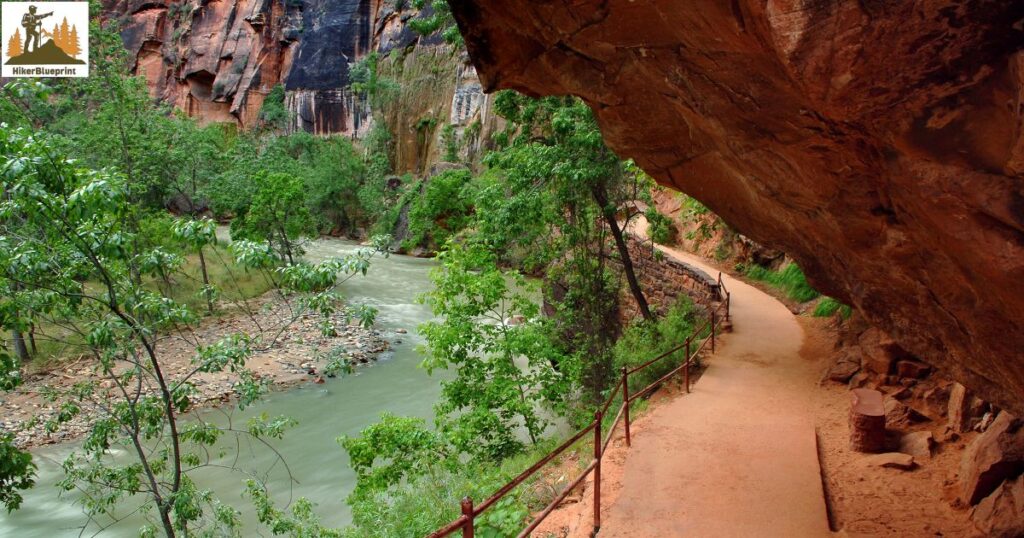
Riverside Walk follows the Virgin River through a dramatic canyon. It’s relatively flat, paved, and suitable for many visitors who want a scenic walk without a strenuous climb.
The route is approximately 2 miles round trip. Its popularity means it can become busy later in the morning.
Take an early shuttle to the Temple of Sinawava and begin walking before the main wave arrives. This is one of the simplest ways to avoid crowds in Zion while still experiencing the park’s iconic canyon scenery.
Pa’rus Trail: An easier alternative
The Pa’rus Trail follows the Virgin River between the Visitor Center and Canyon Junction. It is paved, relatively gentle, and open to leashed pets and bicycles.
The full trail is approximately 3.2 miles one way? No. The National Park Service lists it as approximately 1.6 miles one way, making the full out-and-back about 3.2 miles.
It works well when you want a relaxed walk, sunset photography, or a break from steeper hiking. It is also one of the park’s more accessible trail options, although some sections and connections may present limitations.
Canyon Overlook: A scenic east-side option
Canyon Overlook offers a memorable view over lower Zion Canyon. The hike is about 1 mile round trip, with approximately 163 feet of elevation change.
The trail has uneven rock, steps, and exposed sections. It isn’t a smooth, fully accessible path, and parking near the trailhead is limited.
Visit early or later in the day, and never stop along the highway to create an unofficial parking space. This is a useful option when you want to avoid crowds in Zion Canyon without relying on the main canyon shuttle stops.
Watchman Trail: Check before you go
Watchman Trail is normally a moderate hike of approximately 3.3 miles round trip, with around 368 feet of elevation change according to the park’s hiking guide.
However, the National Park Service posted a closure notice for this trail in August 2026 pending repairs. Do not include it in your itinerary unless the park confirms it has reopened.
This is a good example of why older hiking articles and saved itineraries should never replace current park alerts.
The Narrows: Popular, but worth planning carefully
The Narrows is one of Zion’s signature experiences. The bottom-up route begins at the Temple of Sinawava and follows the Virgin River upstream.
There isn’t a conventional maintained trail through the river. You’ll walk through water, sometimes over slippery rocks, and the distance depends on how far you choose to go.
Start early if conditions permit, but remember that avoiding crowds in Zion should never take priority over river safety. The Narrows closes when the Virgin River flow exceeds 150 cubic feet per second or when a flash flood warning is issued. Check the official conditions before leaving.
Explore Beyond the Main Zion Canyon
The biggest mistake many visitors make is treating Zion as if it were only the main canyon. The park covers a much larger area, with different landscapes and access roads.
If the central canyon feels crowded, consider spending part of your day elsewhere.
Kolob Canyons: A quieter northwest section

Kolob Canyons is in the northwestern part of the park, accessed from Interstate 15. Its red cliffs, scenic drive, and hiking opportunities offer a different experience from the main canyon.
The area generally receives fewer visitors than the central Zion Canyon corridor. That doesn’t mean you’ll have every trail to yourself, but it can be a welcome change during busy periods.
Plan for the drive rather than treating it as a quick detour. Check the Kolob Canyons Road status before setting out, particularly during winter.
Zion’s east side: Scenic driving and sandstone landscapes
The Zion-Mount Carmel Highway crosses the park between the main canyon and the east entrance. Along the way, you’ll see changing sandstone formations, open landscapes, and striking rock patterns.
Canyon Overlook is one of the best-known short hikes on this side. You can also enjoy the drive itself, provided your vehicle meets the highway’s restrictions.
Large vehicles that exceed the park’s size limits cannot travel between Canyon Junction and the East Entrance. Check the current restrictions before planning a cross-park drive.
Kolob Terrace Road: A different kind of Zion
Kolob Terrace Road leads toward higher-elevation landscapes and access to areas such as Lava Point. The scenery differs from the towering walls of the main canyon.
Access is seasonal, and snow can affect the road. Don’t assume that a route shown on a map is open simply because the park itself is operating.
Exploring these separate areas is one of the most reliable ways to avoid crowds in Zion without leaving the national park.
Understand the Shuttle System Before You Arrive
The shuttle system is central to visiting Zion Canyon during its operating season. Private vehicles are not allowed on Zion Canyon Scenic Drive while the shuttle system is running.
There are two main services:
- Zion Canyon Line: Travels between the Visitor Center and stops inside the canyon.
- Springdale Line: Connects locations around Springdale with the park’s pedestrian entrance.
The park shuttle is free, and you don’t need a ticket or reservation to ride it. The journey between the Visitor Center and Temple of Sinawava takes about 45 minutes one way.
For a smoother visit:
- Park at the Visitor Center early if spaces are available.
- If the lot is full, use legal parking in Springdale.
- Take the town shuttle or walk to the pedestrian entrance.
- Board the canyon shuttle and get off at your chosen stop.
- Check the final departure time before starting your return journey.
Don’t assume you can drive into the canyon before the first shuttle or after the last one. During shuttle season, the scenic drive remains closed to private vehicles even outside shuttle operating hours.
If your priority is to avoid crowds in Zion, understanding this system before arrival can save a surprising amount of time.
Build a Flexible One-Day or Two-Day Itinerary
A rigid schedule can fall apart quickly in a busy national park. A better approach is to choose a priority hike, add one or two alternatives, and leave room for delays.
One-day plan
| Time | Suggested activity |
|---|---|
| Early morning | Arrive, park, and board an early shuttle |
| Morning | Hike Riverside Walk or another priority trail |
| Late morning | Enjoy a second short walk or scenic stop |
| Midday | Lunch and rest away from the busiest trailheads |
| Afternoon | Explore the east side or another accessible area |
| Late afternoon | Return for a short walk or photography if time allows |
If you only have one day, focus on a realistic selection rather than trying to cover every famous attraction. My Zion in One Day guide can help you organize a shorter visit.
Two-day plan
With two days, you can give the main canyon its own morning and explore a different section of the park on the second day.
A longer stay gives you more flexibility if weather, parking, or closures disrupt your plans. For a fuller itinerary, see 2-Day Zion National Park Itinerary and the 4-Day Zion and Bryce Canyon Itinerary.
Fees, Parking, and Reservations to Know About
A quieter visit still requires some practical planning. Park entry, parking, and permits are separate considerations.
Entrance fees
As of November 2026, the National Park Service lists the standard private-vehicle entrance fee at $35, valid for 1–7 days. Other pass types and rates apply to pedestrians, motorcycles, and eligible annual-pass holders.
The NPS fee page also lists an additional $100 nonresident fee for visitors aged 16 and older who are not US residents, unless they enter using an eligible Annual or America the Beautiful pass. Check the official fee rules before travelling, as policies can change.
Parking
Parking inside Zion Canyon is limited. The Visitor Center lot often fills early, particularly during busy months.
If it’s full, use designated parking in Springdale and the town shuttle or pedestrian entrance. Never park on shoulders, in restricted areas, or in a way that blocks traffic.
Permits and reservations
You generally don’t need a reservation to enter Zion or ride the shuttle. However, some activities require permits.
- Angels Landing: Requires a permit.
- Overnight backpacking: Requires a wilderness permit.
- Certain technical canyoneering and overnight activities: Require permits.
- Campgrounds: Require reservations.
The bottom-up Narrows hike from the Temple of Sinawava does not normally require a permit, but conditions and restrictions still apply.
Common Mistakes That Make Zion Feel More Crowded
A few avoidable decisions can turn a good day into a frustrating one.
- Arriving mid-morning: Parking and shuttle queues may already be building.
- Trying to hike every famous trail: Popular routes take time, and travel between them adds up.
- Ignoring the shuttle timetable: You could face a long wait or miss the final return service.
- Assuming every road is open: Seasonal snow, rockfall, and other hazards can cause closures.
- Treating the east side and Kolob as quick detours: These areas require separate driving time.
- Following old trail recommendations: A trail that was open when an article was written may now be closed.
A little flexibility goes a long way. When one area is congested, switch to a realistic backup rather than spending hours waiting for conditions to improve.
FAQs About Visiting Zion During Busy Periods
What is the least crowded day to visit Zion?
Tuesday through Thursday are often better choices than weekends, although no weekday is guaranteed to be quiet.
What time should I arrive at Zion National Park?
Aim for early morning, ideally before 7 a.m. during busy periods, and check the current shuttle schedule before travelling.
Is Zion less crowded in winter?
Generally, yes. January and February are often quieter, but cold weather, ice, and seasonal road conditions can affect hiking plans.
Can I avoid the shuttle by driving into Zion Canyon?
Not while the seasonal shuttle system is operating. Private vehicles are prohibited on Zion Canyon Scenic Drive during those periods.
Which part of Zion is usually quieter?
Kolob Canyons and parts of the east side generally receive fewer visitors than the central canyon, although conditions vary.
Do I need a reservation to visit Zion National Park?
You generally don’t need an entry reservation or shuttle reservation. Special activities, permits, and campground stays have separate requirements.
Is The Narrows worth visiting during a busy season?
Yes, if river conditions are safe and you’re prepared for the water. Start early, check closures and flow levels, and turn around before conditions become uncomfortable.
Conclusion
The best way to avoid crowds in Zion is to plan around the park’s busiest places and times. Arrive early, choose one priority hike, understand the shuttle system, and explore areas beyond the central canyon when it makes sense.
You don’t need to see everything in one visit. Give yourself room to change plans, check official conditions before setting out, and enjoy the scenery at a pace that makes the trip worthwhile.
You may also like this:
Best Easy National Park Hikes for Beginners: Scenic, Low-Stress Trails Worth the Drive
How to Avoid Crowds in Yosemite: Start Times, Trail Choices, and Simple Tradeoffs That Work

Ahmed Khubaib is a passionate hiker with over 10 years of experience in hiking, camping, and exploring trails solo and with kids.
He shares firsthand experiences, practical hiking tips, and trail guides to help adventurers explore the outdoors safely.