Winter is the best season for exploring Death Valley’s lower-elevation trails, but cooler weather doesn’t remove the desert’s risks. Short daylight, dry air, wind, rough roads, and sudden cold after sunset still matter.
A smart Death Valley Winter Hiking plan keeps the first day simple: choose a route that suits your ability, start early, carry enough water, and set a turnaround time before you leave the trailhead. You’ll enjoy more when you’re not rushing to beat darkness. That simple approach is the foundation of a safe Winter Hiking day.
Key Takeaways
- The best general hiking season is November through March, according to the National Park Service.
- For a first visit, choose short, clearly described routes near established roads.
- Start longer hikes early and aim to finish well before sunset.
- Carry at least 2 liters of water for a short winter day hike, and more for longer outings.
- Check current Death Valley road conditions and alerts and trail information on the morning of your hike.
- High peaks can hold snow and ice even when the valley floor feels mild.
Death Valley Winter Hiking at a Glance
This comparison helps you match a route to your ability. Distances are approximate round-trip figures; check the official Death Valley hiking trail descriptions before setting out.
| Trail or walk | Distance | Difficulty | Elevation gain | Approx. time |
|---|---|---|---|---|
| Harmony Borax Works | 0.4 mi | Easy, paved | 50 ft | 30 min |
| Salt Creek Interpretive Trail | 0.5 mi | Easy, boardwalk | Flat | 30 min |
| Badwater Salt Flat | 1 mi | Easy | Minimal | 30–60 min |
| Mesquite Flat Sand Dunes | 2 mi | Easy, route-finding on sand | Variable | 1–2 hr |
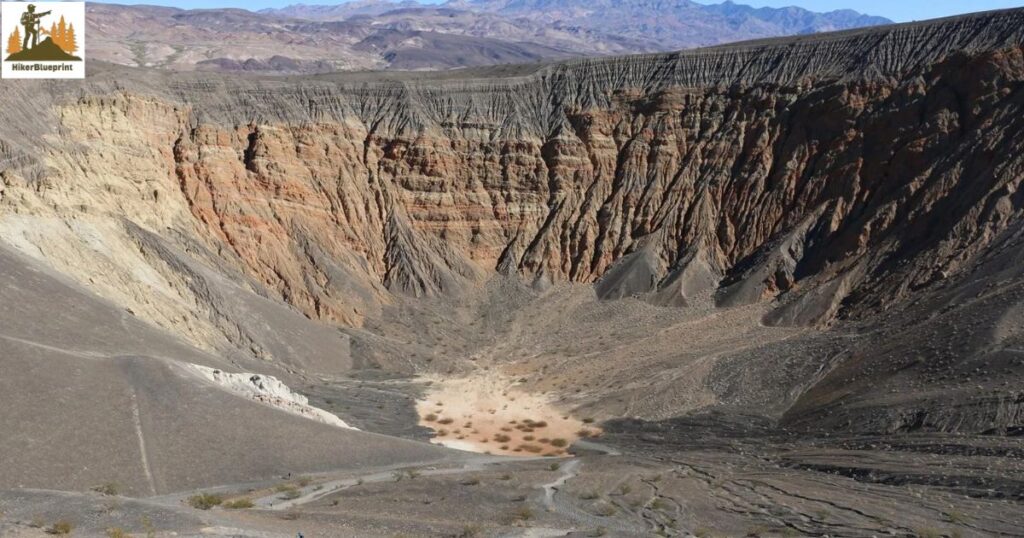
| Ubehebe Crater Loop | 1.5 mi | Moderate, exposed rim | 500 ft | 1 hr |
| Darwin Falls | 7 mi | Moderate | 450 ft | 2.5–5 hr |
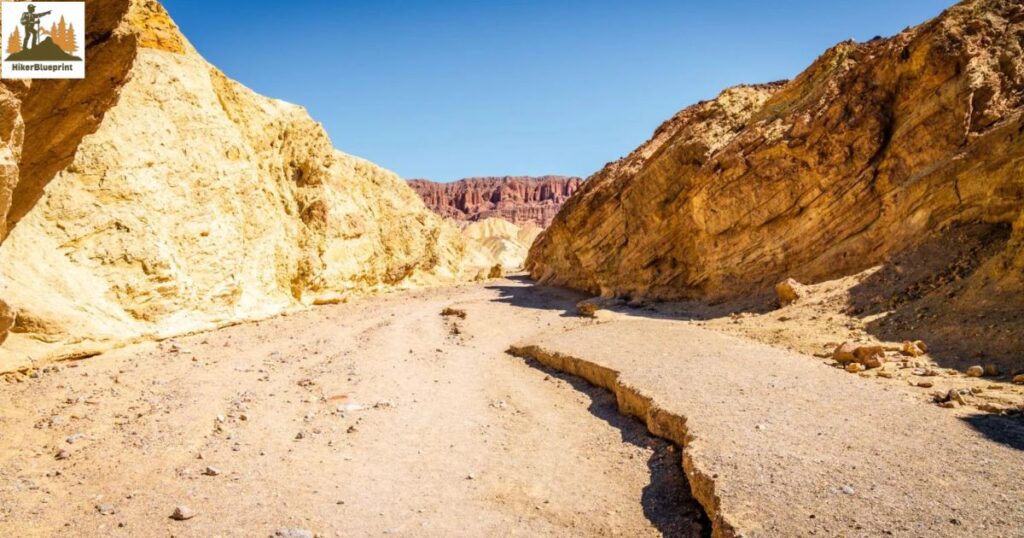
| Golden Canyon | 3 mi | Moderate | Varies by route | 1.5–2 hr |
| Mosaic Canyon | 4 mi | Moderate, scrambling | Varies | 2–3 hr |
| Telescope Peak | 12.2 mi | Difficult | 3,375 ft | About 7 hr |
Dunes and salt flats have no fixed trail line, so mileage varies. Darwin Falls access is affected by a washed-out road; check the approach first. Telescope Peak is not a beginner winter hike and may require mountaineering equipment.
Choose the Right Winter Window and Start Time
The NPS identifies November through March as the best hiking season in Death Valley. Late fall through February often brings the most comfortable conditions on the valley floor. March can still be excellent, but stronger sun and warmer afternoons become more likely.
For Winter Hiking, timing matters as much as distance. A reliable Death Valley Winter Hiking schedule leaves room for slower footing, photo stops, and a longer drive between trailheads. Shade and wind can make a mild morning feel cold, while exposed terrain warms quickly once the sun is high. At higher elevations, winter conditions can be very different from those at Badwater Basin.
A Practical Winter Hiking Schedule
| Hike type | Suggested start | Turnaround plan | Aim to finish |
|---|---|---|---|
| Short walk or viewpoint stroll | 8–10 a.m. | Flexible, but keep it short | By 2 p.m. |
| Moderate canyon hike | 7–9 a.m. | Set a firm time before starting | By 3 p.m. |
| High-elevation or snow-prone route | At first light, only if properly equipped | Turn around early if snow, ice, or weather worsens | Well before dark |
These are planning targets, not park rules. Check sunrise and sunset, allow extra time for slow footing, and turn back at your preset time.
Pick a First-Timer Route With Easy Bailouts
A good first day is not a contest to cover the most miles. Keep your first Winter Hiking route close to a maintained road whenever possible. Choose a route with obvious navigation, a manageable distance, and a straightforward return. This is the safest way to build confidence with Winter Hiking. If you’re unsure which route fits, consult the easy national park hikes for beginners guide, then choose the shortest option and treat it as a warm-up for future Winter Hiking trips.
Best Beginner-Friendly Walks
Badwater Basin Salt Flat: About 1 mile round trip across a mostly level salt-flat area. The surface can be uneven, and the walk farther out is not a marked trail. Stay aware of changing ground conditions.

Mesquite Flat Sand Dunes: Around 2 miles for a typical out-and-back wander. There is no marked route across the dunes, and walking in soft sand takes more effort than the mileage suggests.

Salt Creek Interpretive Trail: A 0.5-mile accessible boardwalk loop. Water usually reaches the boardwalk from November through May, but wildlife sightings are never guaranteed.
Harmony Borax Works: A 0.4-mile paved interpretive loop with only about 50 feet of elevation gain. It’s a useful low-effort stop near Furnace Creek.
Moderate Hikes for a Longer Day
Ubehebe Crater Loop is about 1.5 miles with 500 feet of gain. The rim is exposed, steep in places, and unsuitable for anyone uncomfortable with heights. Stay on the established path because the loose crater edges can be unstable.
Golden Canyon Trail offers a roughly 3-mile moderate out-and-back option, depending on where you turn around. Mosaic Canyon Trail is about 4 miles round trip and includes narrow passages and rock scrambling. Avoid either canyon if rain is possible; flash flooding can occur even when skies above you look clear.
For more route ideas, compare the Best Hikes in Nevada and Best Hikes in California guides, then use the Death Valley National Park Map Guide to understand the distances between trailheads. A short walk at Zabriskie Point, a stop at Artist’s Palette, or a visit to Dante’s View can add variety, but these are primarily scenic stops rather than substitutes for a planned hike. The Death Valley National Park One-Day Itinerary can help organize a separate sightseeing day.
What to Pack for Cold Shade, Dry Air, and Wind
The right Winter Hiking kit is simple, but don’t confuse mild valley temperatures with a risk-free outing. Good preparation matters on every Hiking outing, even a short one.
- Water: Carry at least 2 liters for a short winter day hike, as the NPS advises. Bring more for longer routes, warm afternoons, or strenuous terrain. Don’t count on springs or streams for drinking water.
- Layers: Wear a light base layer and bring an insulating jacket. Add a wind shell, hat, and gloves for exposed viewpoints or colder mornings.
- Sun protection: Pack sunglasses, sunscreen, and a brimmed hat. Winter sun still reflects off salt and pale rock.
- Navigation: Download offline maps before entering the park and carry a paper map for longer or less-defined routes. Cell service is unreliable.
- Emergency basics: Bring a headlamp, first-aid supplies, snacks, and a fully charged phone. Tell someone your route and expected return time.
- Footwear: Use sturdy hiking shoes with dependable traction. Sand, loose gravel, and smooth canyon rock can all affect footing.
Check Access, Fees, and Conditions Before You Drive
A Death Valley Winter Hiking plan should always include a same-day road check. Make checking conditions part of your Hiking routine, not an afterthought. Storms can wash out roads, leave debris, or make unpaved routes impassable. An open road may still be rough or slow.
As of the NPS conditions update dated November 1, 2026, Bonnie Clare Road and Scotty’s Castle were closed, Darwin Falls Road was washed out, and Titus Canyon Road was closed for repairs. The NPS said Darwin Falls access would likely remain closed until summer 2027, while hikers could park along CA-190 and walk in. Do not assume that arrangement makes the route suitable for every visitor; check the latest instructions before going. Lower Wildrose Road also had storm damage and vehicle restrictions.
The standard private-vehicle entrance pass is $30 for seven days. The park is cashless, and no reservation is required for general entry. Check the current Death Valley entrance fees and passes before your trip, especially if you plan to use an annual or interagency pass.
Stop at the Furnace Creek Visitor Center when it’s open for current advice, but don’t rely on it as your only source. Check alerts before leaving and again before starting a hike.
A Simple First-Day Plan
If you’re new to Winter Hiking, keep the day flexible: A flexible Winter Hiking itinerary is easier to adjust when weather, road access, or energy levels change.
- Start with a short morning walk at Harmony Borax Works or Zabriskie Point.
- Choose one main hike, such as Badwater Salt Flat, Salt Creek, or Golden Canyon, based on your energy and conditions.
- Take a proper lunch and warm-up break rather than squeezing in another long route.
- Finish with a short scenic stop at Mesquite Flat Sand Dunes if daylight and weather allow.
Don’t combine several distant trailheads just because they look close on a map. Driving between park areas takes time, and winter daylight is limited. Save Telescope Peak and other demanding high-elevation routes for a trip with suitable experience, equipment, and a detailed weather check. The Winter Hiking Plan should leave you with enough time and energy to get back safely.
Common Mistakes to Avoid
- Starting too late: A late start can turn a moderate hike into a race against sunset.
- Underestimating the cold: Wind and shade can make exposed areas surprisingly uncomfortable.
- Carrying too little water: Cool weather does not stop dehydration in the desert.
- Trusting old road information: Flood damage and closures can change access quickly.
- Treating every route as a marked trail: Dunes, washes, and many desert routes require careful navigation.
- Entering a canyon when rain is possible: Choose a safer route if storms are forecast anywhere in the drainage.
Death Valley Winter Hiking FAQs
Is winter the best time to hike in Death Valley?
Generally, yes. The NPS recommends November through March for hiking, while lower-elevation summer heat can be dangerous.
What time should I start a Death Valley winter hike?
For a short walk, 8–10 a.m. is a reasonable target. Start earlier for longer routes and set a firm turnaround time.
How much water should I carry?
The NPS recommends at least 2 liters for a short winter day hike. Carry more for longer outings and never rely on natural water sources.
Do I need a headlamp for a day hike?
It’s a smart backup, especially during short winter days or if a route takes longer than expected.
Can I hike Telescope Peak in winter?
Only with appropriate winter experience and equipment. Snow and ice can turn it into a mountaineering route, so beginners should choose lower-elevation trails.
Make Your First Winter Hike a Manageable One
The best first outing is one you can enjoy without rushing. That is the goal of a sensible Death Valley Winter Hiking plan. Choose a short route, check the latest road and weather information, carry enough water, and turn around while you still have plenty of daylight.
A careful Winter Hiking plan lets you appreciate the desert’s scale while respecting how quickly conditions can change. Start with an easy win, then save the bigger climbs for another day.

Ahmed Khubaib is a passionate hiker with over 10 years of experience in hiking, camping, and exploring trails solo and with kids.
He shares firsthand experiences, practical hiking tips, and trail guides to help adventurers explore the outdoors safely.