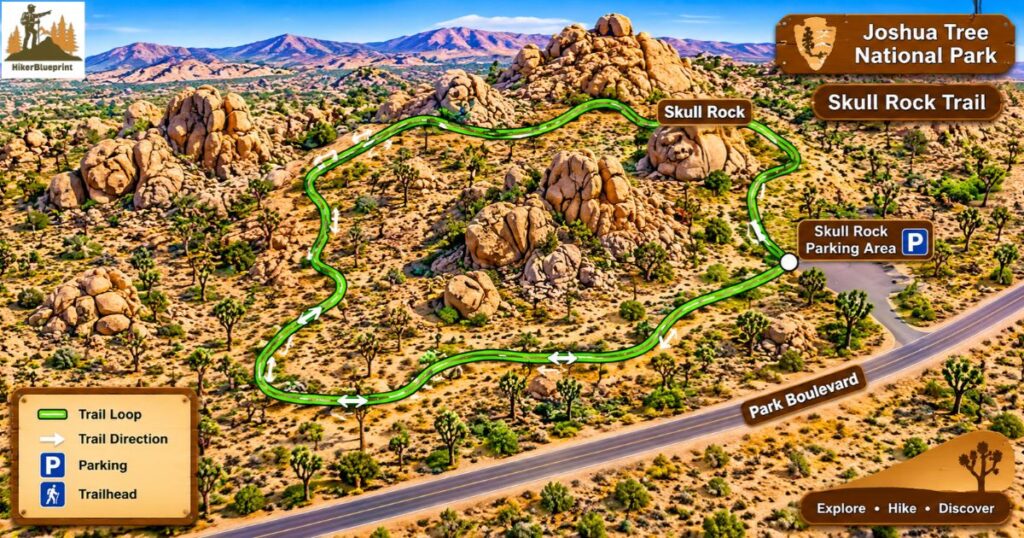
The Skull Rock Trail is one of the most recognizable short hikes in Joshua Tree National Park, California. Its namesake granite formation looks remarkably like a human skull, but the walk offers much more than a quick photo stop. The route winds through enormous boulder piles, sandy washes, desert vegetation, and the edge of Jumbo Rocks Campground.
At around 1.7 miles, this loop is a manageable way to experience Joshua Tree’s unusual landscape without committing to a long backcountry hike. Here’s what to expect, where to start, and how to plan your visit.
Skull Rock Trail: Quick Overview
| Trail Detail | Information |
|---|---|
| Location | Joshua Tree National Park, California |
| Distance | 1.7 miles (2.7 km) |
| Route | Loop |
| Elevation gain | Approximately 160 feet (49 m) |
| Difficulty | Easy |
| Estimated time | 1–2 hours |
| Trailhead | Skull Rock Parking Area, Park Boulevard |
| Best seasons | Fall, winter, and spring |
| Dogs | Not allowed on trails |
| Reservations | Not required |
The National Park Service lists the route as a 1.7-mile loop with approximately 160 feet of elevation change. Walking time depends on your pace and how often you stop to explore the rock formations. Check the official NPS trail information before setting out.
Where Is Skull Rock Trail and How Do You Get There?
The trail is in the central part of Joshua Tree National Park, along Park Boulevard, just east of Jumbo Rocks Campground. The main day-hiking access point is the Skull Rock Parking Area, opposite the campground entrance.

From the parking area, you can reach the famous formation within moments. The complete loop continues through the surrounding boulder landscape and campground area before returning toward the trailhead. The parking area is approximately 11 miles from the Oasis Visitor Center and 23 miles from the Joshua Tree Visitor Center.
Use the designated parking area rather than occupying a campground site. Day-use parking inside Jumbo Rocks Campground is extremely limited, and parking in a reserved campsite without a reservation can result in a fine.
What to Expect on the Hike
The Skull Rock Trail begins with the attraction most visitors come to see. The enormous granite boulder sits close to Park Boulevard, making it easy to reach from the parking area. Over thousands of years, water collected in small depressions and gradually wore away the granite, creating hollows that resemble eye sockets.

After passing the formation, the loop leads through a landscape of rounded granite boulders, sandy washes, and desert plants. You’ll cross varied surfaces, including packed dirt, loose sand, and exposed rock. Some sections narrow between boulders, while rocky steps near the campground add a little extra effort.

The route also passes through different plant communities. Look for desert shrubs, Mojave yucca, and other hardy vegetation growing between the rocks. Interpretive signs along the route help explain the local environment.

A Short Extension: Discovery Trail
If you want to walk farther, consider adding the nearby Discovery Trail. This separate 0.7-mile loop explores more boulder piles and desert washes, with interpretive signs and views of the surrounding formations. It connects with the Split Rock area, offering options for a longer outing.
Best Time to Hike Skull Rock Trail
Fall, winter, and spring generally offer the most comfortable hiking conditions. Spring can bring wildflowers when rainfall and seasonal conditions are favorable, while cooler winter days are often pleasant for walking.
Summer requires extra caution. Joshua Tree can experience dangerously high temperatures, and this route has very little shade. If you visit during warmer months, start early, carry plenty of water, and reconsider the hike when extreme heat is forecast. There is no running water along the route, and cell service may be unavailable.
Parking, Fees, and Trail Rules
You don’t need a separate hiking permit or trail reservation for this walk, but you must pay the park entrance fee or use a valid park pass. Check the NPS fees and passes page for current prices.
A few important rules:
- Dogs and other pets are not allowed on park trails. Service animals are permitted under NPS rules.
- Stay on established paths and avoid walking on fragile desert vegetation.
- Do not climb on or damage rock formations.
- Carry your own drinking water.
- Check Joshua Tree National Park alerts and conditions before driving to the trailhead.
The trail has uneven, sandy, and rocky surfaces, so it is not wheelchair accessible. Some sections also include steps and narrow passages.
What to Bring
For a comfortable walk, pack:
- Plenty of drinking water.
- Comfortable hiking shoes with good grip.
- Sun protection, including a hat, sunglasses, and sunscreen.
- A downloaded map, since cell coverage can be unreliable.
- Snacks if you plan to explore at a relaxed pace.
Watch your footing around loose sand and uneven granite. Avoid placing your hands into dark rock crevices where wildlife may shelter.
Nearby Hikes and Things to Explore
The Jumbo Rocks area makes a convenient starting point for exploring more of the park. If you have additional time, consider the Hidden Valley Trail Joshua Tree for its enclosed boulder landscape or the Barker Dam Trail for a shorter walk with cultural history.
Other options include the Ryan Mountain Trail for a more demanding climb and Arch Rock Trail Joshua Tree for another distinctive granite formation. Use a Joshua Tree National Park Map Guide to plan driving distances and trail stops. If you’re exploring beyond this area, Best Hikes in California can help you find other routes for a future trip.
Frequently Asked Questions
How long does the hike take?
Most visitors should allow around 1–2 hours, including time to stop at the rock formation and enjoy the scenery.
Is the trail suitable for beginners?
Yes. It is generally considered an easy hike, although loose sand, uneven rocks, and steps require reasonable footing.
Can you see Skull Rock without hiking the whole loop?
Yes. The formation is only a short walk from the parking area, so you can visit it without completing the full route.
Are dogs allowed?
No. Pets are prohibited on park trails, including this route. Service animals are allowed under NPS regulations.
Is there cell service on the trail?
Cell service is unreliable and may be unavailable. Download maps before arriving and tell someone your hiking plans.
Final Thoughts
The Skull Rock Trail is a rewarding short hike for visitors who want to experience Joshua Tree’s distinctive granite landscape. Its unusual rock formation, sandy paths, and boulder-filled scenery make the loop worth more than a quick roadside stop.
Choose a cooler part of the day, bring enough water, and check current park conditions before leaving. If you have time, combine the walk with another nearby trail for a fuller day exploring Joshua Tree.
You may also like this:
Joshua Tree National Park One-Day Itinerary: The Perfect First-Timer’s Guide

Ahmed Khubaib is a passionate hiker with over 10 years of experience in hiking, camping, and exploring trails solo and with kids.
He shares firsthand experiences, practical hiking tips, and trail guides to help adventurers explore the outdoors safely.