The Barker Dam Trail is one of the most rewarding short hikes in Joshua Tree National Park, California. This easy loop combines massive granite boulders, desert vegetation, historic ranching structures, and fascinating Native American rock art.
Unlike longer desert hikes, this route offers plenty to explore without demanding hours of walking. It’s an excellent choice for families, beginners, photographers, and visitors looking to experience Joshua Tree’s natural and cultural history.
Barker Dam Trail: Quick Overview
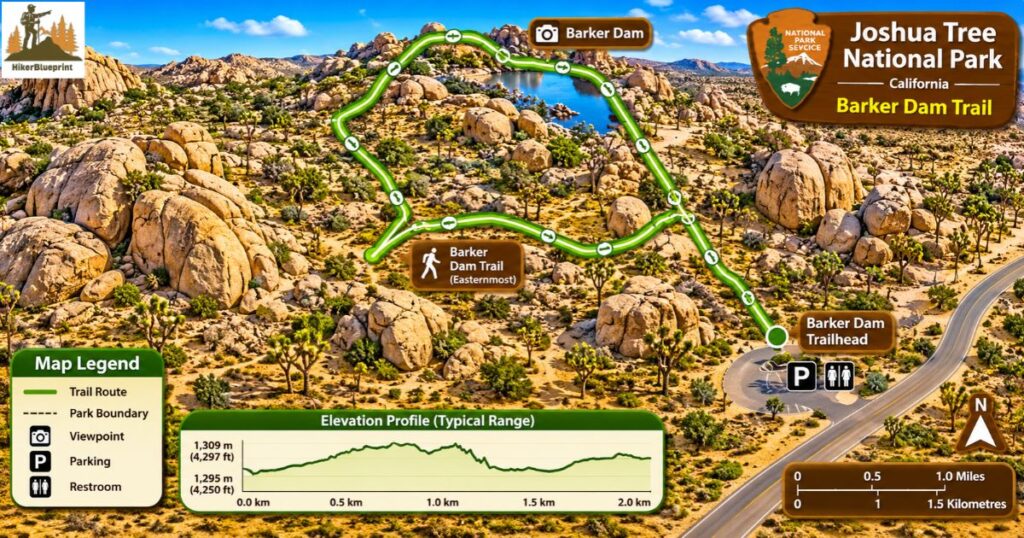
| Trail Information | Details |
|---|---|
| Location | Joshua Tree National Park, California |
| Distance | 1.1 miles (1.8 km) |
| Trail Type | Loop |
| Difficulty | Easy |
| Elevation Gain | 50 feet |
| Hiking Time | 30–45 minutes |
| Highest Elevation | Varies slightly along the route |
| Trail Surface | Dirt, sand, and granite rocks |
| Best Season | October–April |
| Pets | Not permitted |
| Permit | No separate hiking permit |
| Parking | Barker Dam Trailhead |
The National Park Service identifies this as an easy, relatively flat nature trail. Although short, expect occasional uneven rocks and small steps.
Where Is Barker Dam Trail?
The trail sits in the northern section of Joshua Tree National Park, near Hidden Valley and Intersection Rock.
The trailhead is accessible from Park Boulevard through the signed turnoff for Hidden Valley Campground, Keys Ranch, and Barker Dam.
From the West Entrance near Joshua Tree, follow Park Boulevard toward Intersection Rock. Continue to the signed Barker Dam turnoff and follow the access road to the parking area.
Visitors entering from Twentynine Palms can follow the main park road toward the Hidden Valley area.
Parking can become limited, particularly during the busy fall, winter, and spring seasons. The nearby Echo T parking area provides an alternative, with a connecting trail.
What Makes This Hike Special?
The Historic Barker Dam
The main attraction is the historic water reservoir built by cattle ranchers in the early 1900s.

C.O. Barker constructed the original dam around 1900 to collect precious desert rainwater for livestock. William F. Keys later modified and enlarged the structure.
The dam demonstrates how early ranchers adapted to the challenging Mojave Desert environment.
One important detail: the reservoir isn’t always filled with water. Rainfall determines its water levels, and it remains dry for much of the year.
Stay on the designated trail and never climb onto the historic dam structure.
Impressive Granite Rock Formations
As you follow the loop, you’ll encounter enormous monzogranite boulders scattered throughout the landscape.
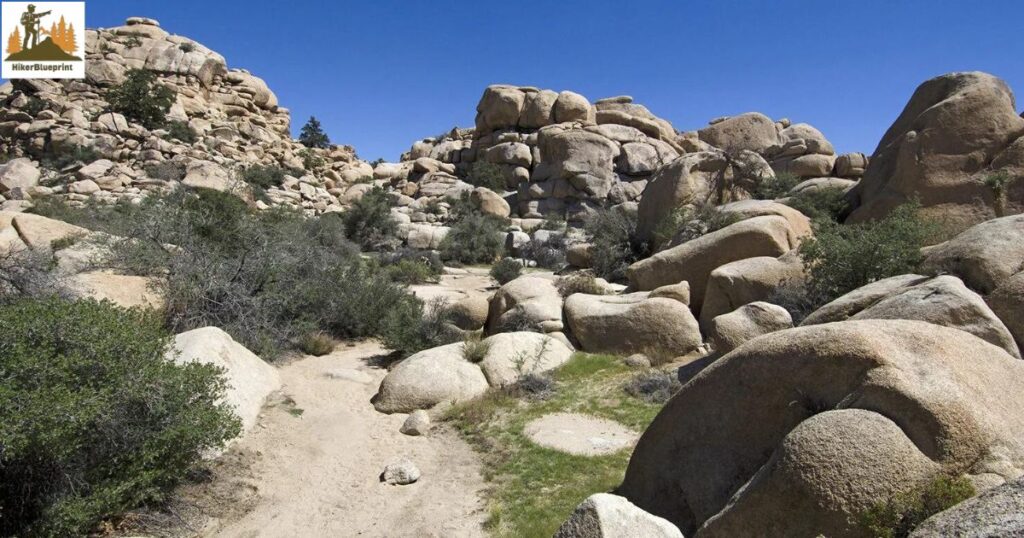
These weathered formations create narrow passages, interesting shapes, and natural viewpoints. Their contrasting colors also make excellent photography subjects.
The route provides a wonderful introduction to Joshua Tree’s distinctive rocky terrain without requiring technical climbing.
Native American Rock Art
Another significant feature is the historic rock art site along the route.
The artwork offers a glimpse into the region’s human history and cultural heritage. However, visitors should observe it respectfully.
Never touch, climb, or stand on the rock formations containing cultural artwork. Some markings might not be immediately visible.
Desert Plants and Wildlife
The surrounding landscape supports a variety of Mojave Desert vegetation, including:
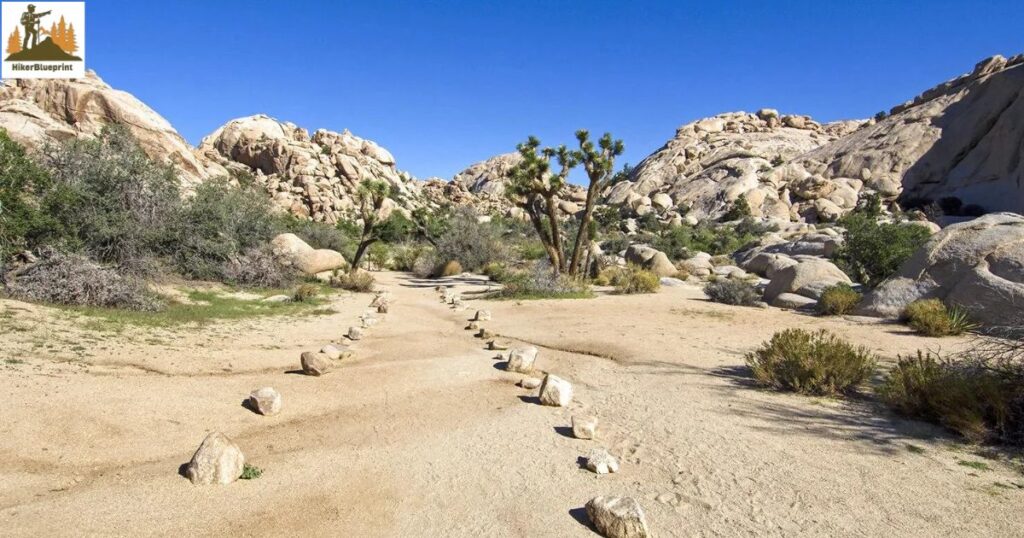
- Joshua trees.
- Creosote bushes.
- Mojave yucca.
- Pinyon pines.
- Desert willow.
Keep an eye out for birds, reptiles, and other desert wildlife. Desert bighorn sheep may also be spotted in the surrounding landscape.
Wildlife sightings are never guaranteed, so maintain a respectful distance from animals.
What Is the Hiking Experience Like?
The route begins on relatively flat, compact dirt before gradually transitioning into sandy sections and granite boulders.

As you continue, the terrain becomes more interesting. You’ll encounter natural rock steps, narrow passages, and a viewpoint overlooking the historic reservoir.
The dam area is a natural stopping point for photographs and a closer look at the surrounding landscape.
After exploring the reservoir, the loop continues through additional rocky terrain and eventually returns toward the trailhead.
Although classified as easy, this isn’t a completely smooth walking path. Some sections require stepping over rocks, making appropriate footwear important.
Best Time to Visit
October through April generally offers the most comfortable hiking conditions.
Spring brings pleasant temperatures and opportunities to see desert wildflowers following sufficient rainfall. Fall provides cooler weather and attractive desert scenery.
Winter is another good option, although mornings and evenings can become quite cold.
Summer requires additional caution. Temperatures can exceed 100°F, and the trail offers very little shade. If visiting during warmer months, hike early in the morning and carry sufficient water.
Parking, Fees, and Hiking Restrictions
There is no separate hiking permit or activity fee for this route. However, visitors must have a valid Joshua Tree National Park entrance pass.
The standard private vehicle entrance pass currently costs $30 and covers seven consecutive days.
Before visiting, check:
Additional restrictions:
- Pets are not permitted on the trail.
- Strollers are prohibited.
- Wheelchair access is not available.
- Visitors must respect protected cultural and historic structures.
Nearby Hiking Trails Worth Exploring
If you have additional time, several other trails offer different perspectives of Joshua Tree National Park.
- Hidden Valley Trail Joshua Tree: Another excellent short hike through a spectacular rock-enclosed valley.
- Skull Rock Trail: Famous for its unusual granite formation resembling a human skull.
- Arch Rock Trail Joshua Tree: A scenic route featuring a natural granite arch.
- Ryan Mountain Trail: A more challenging hike offering expansive desert views.
You can also explore our Best Hikes in California guide when planning additional outdoor adventures.
Frequently Asked Questions
How long does the hike take?
Most visitors can complete the loop in approximately 30–45 minutes, although photography and sightseeing can extend the visit.
Is this hike suitable for beginners?
Yes. Its short distance and minimal elevation gain make it a good beginner-friendly option. However, uneven rocks require careful footing.
Does Barker Dam always contain water?
No. The reservoir depends on rainfall and is frequently dry. Water levels can change considerably between visits.
Are dogs allowed?
No. Pets are prohibited on this trail. Permitted service animals are an exception.
Can you visit throughout the year?
Yes. The route is open year-round, subject to park closures and conditions. Summer temperatures can be dangerously hot.
Final Thoughts
The Barker Dam Trail is an excellent introduction to Joshua Tree’s natural beauty and fascinating ranching history. Its granite formations, desert vegetation, historic reservoir, and cultural features make this short loop worthwhile.
Choose a cooler time of year, bring enough water, and check official park conditions before leaving. Even a short walk through this remarkable desert landscape can become a memorable part of your Joshua Tree adventure.
You may also like this:
Joshua Tree National Park Map: Where to Start on Your First Visit
Joshua Tree National Park One-Day Itinerary: The Perfect First-Timer’s Guide

Ahmed Khubaib is a passionate hiker with over 10 years of experience in hiking, camping, and exploring trails solo and with kids.
He shares firsthand experiences, practical hiking tips, and trail guides to help adventurers explore the outdoors safely.